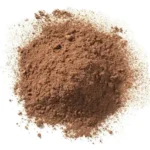

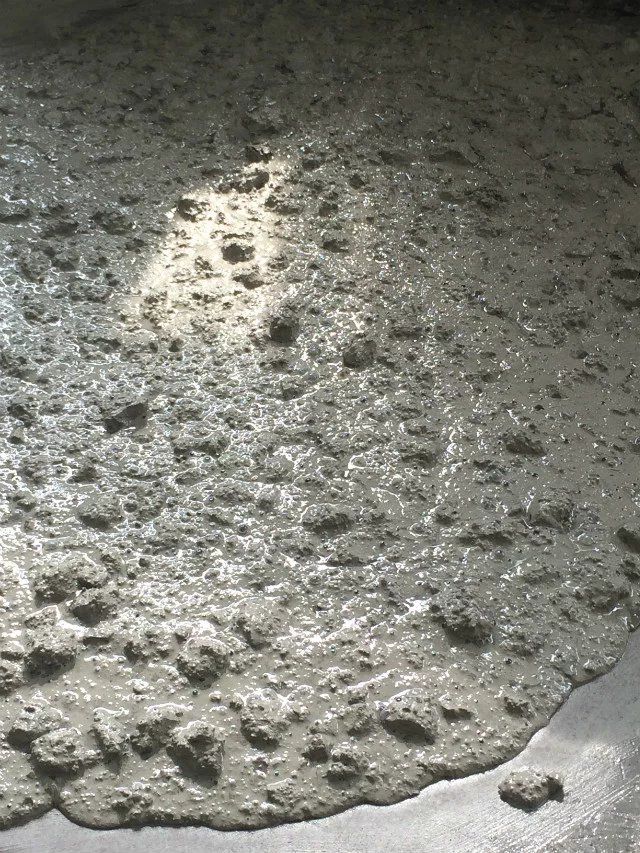
SNF superplasticizer—also called sulfonated naphthalene-formaldehyde condensate or sodium naphthalene sulfonate formaldehyde—is an anionic concrete dispersant used when a producer needs higher flow at a given water content or lower water demand at a defined consistency. Results are formulation-dependent: cement chemistry, supplementary cementitious materials, aggregate grading, temperature, mixing sequence and the supplied SNF grade all influence performance.
What SNF is and how it disperses cement
SNF molecules contain sulfonated aromatic groups and a condensed naphthalene-formaldehyde backbone. In fresh cement paste, the molecules adsorb on particle surfaces and increase negative surface charge. The resulting electrostatic repulsion reduces flocculation, releases water trapped in agglomerates and improves dispersion. Unlike modern polycarboxylate ether products, SNF should not be described as relying equally on long-side-chain steric hindrance; its principal practical mechanism is adsorption and electrostatic repulsion.
Dispersion can improve flow or permit a lower water-to-cementitious-material ratio, but neither strength nor durability improvement is automatic. Those outcomes depend on the final mix proportions, air content, curing and whether the required consistency and placement quality are maintained.
Where SNF is evaluated
- Ready-mix and site concrete: for workability adjustment where transport time and slump retention have been confirmed by trials.
- Precast concrete: where early handling, surface finish and production-cycle requirements are measured against the plant process.
- Mortars and grouts: when flow, segregation resistance, bleeding and set time are evaluated together.
- Gypsum or cementitious systems: only after confirming compatibility with binders, retarders, accelerators and other additives.
High-strength, self-consolidating or difficult-placement concrete cannot be qualified from the generic name “SNF” alone. Such mixes require project-specific testing and may favor another dispersant technology when extended retention or unusually high flow is the controlling requirement.
Specifications buyers should compare
A purchase specification should identify whether the product is powder or liquid and state every result on a clear test basis. Common review items include solids or moisture, pH with test concentration, sodium sulfate, bulk density for powder, solution appearance or solubility, and chloride where the concrete standard or project makes it relevant. Values should come from the exact grade’s current TDS and be confirmed by a batch COA; figures copied from unrelated suppliers or generic articles are not substitutes.
Buyers should also confirm manufacturing-site consistency, lot traceability, packaging, storage conditions, shelf-life statement and the supplier’s change-control process. For liquid grades, solids content is essential when comparing price or converting dosage between as-supplied product and dry active material.
Recommended dosage: define the basis first
There is no universal SNF dosage that can be applied safely to every cement system. Use the supplier’s recommended starting trial range for the exact grade, then state whether the percentage is based on total cementitious material and whether it refers to as-supplied product or dry solids. Powder and liquid products cannot be compared by the same percentage unless the solids basis is normalized.
Start with a control mix and several controlled dosage steps. Do not infer a guaranteed water-reduction percentage, strength gain or set-time change from a generic dosage table. Select the lowest practical dosage that meets the project’s fresh- and hardened-property requirements without unacceptable air, bleeding, segregation or setting effects.
Laboratory and plant trial workflow
- Fix cement, SCM sources, aggregate grading, total water, temperature and mixing energy for the comparison.
- Record addition point and mixing sequence; delayed addition can produce a different response from addition with initial water.
- Measure initial slump or flow, retention at relevant intervals, air content, unit weight, bleeding, segregation and setting time.
- Cast specimens for the required strength ages and evaluate surface finish, curing and dimensional behavior when relevant.
- Repeat the selected formulation with production materials and plant equipment before commercial approval.
Compatibility testing is particularly important when cement alkali or sulfate balance changes, supplementary materials are substituted, or retarders, accelerators and air-entraining agents are used. A stable result from one mix should not be presented as a universal property of SNF.
SNF compared with PCE and lignosulfonate
SNF, polycarboxylate ether (PCE) and lignosulfonate admixtures are different chemical families. SNF is often considered for robust electrostatic dispersion and established conventional concrete use. PCE products can provide stronger water reduction or retention at lower active dosage, but performance is highly architecture- and cement-dependent. Lignosulfonates may combine plasticizing and set-retarding behavior and can suit less demanding water-reduction targets. Selection should be based on trials, total formulation cost and production reliability—not generic family claims.
Supplier qualification checklist
- Current TDS, SDS and representative COA for the exact commercial grade.
- Declared test methods and limits for critical properties.
- Sample from the intended manufacturing site and confirmation of batch traceability.
- Packaging, lead time, storage and shelf-life information.
- Technical response process for compatibility or production deviations.
Technical and purchasing resources
Review the SNF product and procurement page, the technical explanation of naphthalene sulfonate formaldehyde, and the SNF pricing and cost-comparison guide. For an exact-grade TDS, sample or formulation discussion, use the LigninCorp contact page.