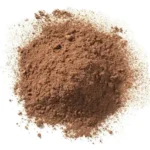


Naphthalene sulfonate formaldehyde (SNF) is an anionic condensate used as a dispersing admixture in concrete and other cementitious formulations. It is also described as sulfonated naphthalene formaldehyde, sodium naphthalene sulfonate formaldehyde or polynaphthalene sulfonate. These names identify a chemical family, not a single universal grade. Product form, solids, sodium sulfate, pH, molecular-weight distribution and production consistency can differ.
Why specifications must be grade-specific
Labels such as SNF-A, SNF-B or SNF-C are not universal international grades. A letter used by one supplier may represent a different specification at another. Buyers should therefore compare the exact numerical specification, declared test methods and representative batch COA instead of approving material from a trade label alone.
The specification should also state whether the product is powder or liquid and whether values are reported on an as-supplied or dry-solids basis. This distinction affects dosage conversion, freight comparison, storage and landed usable cost.
Key properties to review
| Property | Why it matters | Buyer check |
|---|---|---|
| Solids or moisture | Defines active material and dosage conversion | Confirm test method and basis |
| Sodium sulfate | Can influence suitability and commercial grade positioning | Evaluate with cement performance; do not use as the sole quality measure |
| pH | Affects handling and formulation compatibility | Require solution concentration and test temperature |
| Bulk density or liquid density | Supports packaging, feeding and cost calculations | Confirm units and test condition |
| Solubility or insoluble matter | Relates to dissolution, filters and deposits | Test in the intended process water |
| Chloride, where relevant | May be controlled by project or concrete requirements | Use the applicable standard and exact grade result |
Sodium sulfate is an important specification for many buyers, but lower content does not automatically prove better concrete performance. Dispersion response also depends on condensate structure, cement chemistry, sulfate balance, alkalis, fineness and the full admixture package.
How SNF works in cement paste
SNF molecules adsorb on cement particles and increase negative surface charge. The resulting electrostatic repulsion reduces flocculation, releases water held within agglomerates and can improve flow. This mechanism differs from the long-side-chain steric contribution associated with many polycarboxylate ether admixtures.
A more dispersed paste may achieve a target consistency at lower water content, but water reduction, strength and durability are properties of the tested mix—not guaranteed percentages attached to the generic SNF name. Air, curing, aggregate grading, supplementary cementitious materials and placement quality remain important.
Recommended dosage: state the calculation basis
There is no universal SNF dosage. Use only the supplier-recommended starting trial range for the exact commercial grade. State whether the percentage is calculated on total cementitious material and whether it refers to as-supplied product or dry solids. For liquid products, convert the amount using verified solids content before comparing it with a powder.
Prepare a control mix and several dosage steps. Select the lowest practical level that meets consistency and hardened-property requirements without unacceptable setting, air, bleeding, segregation or retention effects. Do not transfer a dosage directly from another cement, plant or climate without revalidation.
Concrete trial design
- Fix raw materials: use the intended cement, supplementary materials, aggregates and production water.
- Define the control: record water-to-cementitious ratio, admixtures, temperature, mixing time and sequence.
- Test fresh properties: measure initial slump or flow, retention at relevant intervals, air content, unit weight, bleeding and segregation.
- Check setting and finishing: record initial and final set where required and observe placing, pumping, finishing and surface response.
- Test hardened properties: measure strength at the required ages and any project-specific permeability, shrinkage or durability indicators.
- Repeat at plant scale: confirm the selected formulation with production equipment and representative material variability.
Compatibility risks
SNF response can change with cement source, clinker sulfate balance, limestone addition, fly ash, slag, silica fume, clay-contaminated aggregate, water temperature and mixing sequence. Retarders, accelerators, air-entraining agents and other admixtures may alter performance. Compatibility should be tested as a complete system rather than inferred from separate supplier data.
Slump retention can be a limiting factor in hot weather or long transport. Where extended retention or unusually high water reduction is essential, compare SNF with an appropriate PCE system under the same conditions. Lignosulfonate admixtures may fit other workability, set-control and cost targets.
Receiving inspection and batch approval
Before the first bulk order, request a current TDS, SDS, specification, representative COA and sample from the intended production site. Establish agreed acceptance limits and retain reference samples where practical. On receipt, verify identity, packaging, lot numbers, appearance and the critical properties defined by the purchase specification.
For ongoing supply, monitor trends rather than only pass/fail results. A change in solids, sulfate, pH, bulk density, dissolution or concrete response may justify investigation even when a single figure remains inside a wide limit. Confirm the supplier’s traceability and change-notification process.
Storage and handling
Store powder in sealed packaging under dry conditions and protect liquid product from contamination and temperatures outside the supplier’s documented range. Follow the exact SDS for personal protection, spill response and disposal. Generic claims such as “non-toxic,” “environmentally harmless” or universally nonflammable should not replace product-specific safety documentation.
Industrial purchasing resources
For commercial grade selection, review the LigninCorp SNF product page, the SNF price and landed-cost guide, and the explanation of SNF chemistry and terminology. Use the LigninCorp contact page to request an exact-grade TDS, sample and qualification discussion.