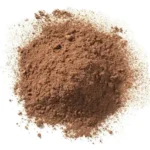

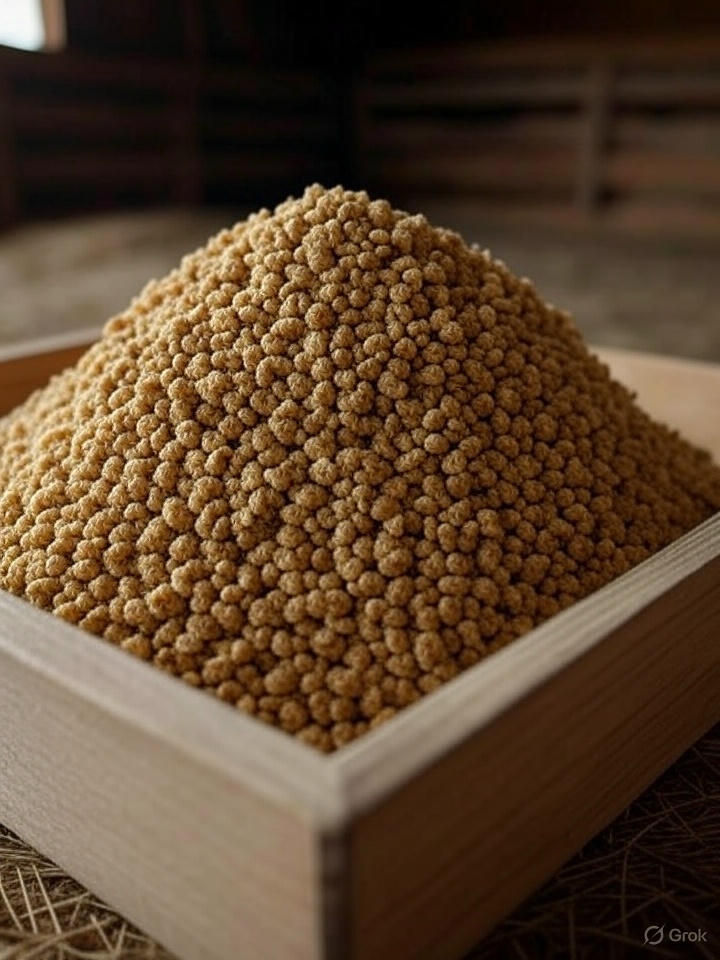
Calcium lignosulfonate is a lignin-derived, water-soluble material that may be evaluated as a binder and process aid in selected fertilizer granulation and agricultural pelletizing systems. Its practical value depends on the exact grade, raw-material surface, moisture balance, mixing sequence, drying conditions and finished-granule requirements. It should therefore be selected through controlled trials rather than treated as a universal binder with a fixed addition rate.
Role in fertilizer granulation
During granulation, a binder helps fine particles form and retain agglomerates while the material is mixed, rolled, compacted, dried, screened and handled. Calcium lignosulfonate can wet particle surfaces and contribute polymeric cohesion in compatible systems. The response varies with fertilizer chemistry, particle-size distribution, soluble salts, recycle load, liquid phase, equipment and residence time.
- Nucleation and growth: binder distribution and local moisture influence whether fine particles form uniform nuclei or uncontrolled lumps.
- Green-granule integrity: wet agglomerates must survive transfer to the dryer without excessive deformation or breakage.
- Dried-granule handling: the selected system should be evaluated for attrition, fines generation, crushing behaviour and storage stability.
- Process control: changes in recycle ratio, feed temperature, spray pattern and drying can alter results even when the nominal binder addition is unchanged.
Applications that may be evaluated
Potential applications include compound-fertilizer granulation, mineral or trace-element agglomeration, soil-input granules and other agricultural pellets where the product specification and local regulations permit its use. Suitability is not established by the product name alone. Acidic or highly alkaline materials, concentrated salts, reactive micronutrients and hydrophobic components can change dissolution, viscosity, surface adsorption and drying behaviour.
Key variables affecting binder performance
| Variable | Why it matters | What to record |
|---|---|---|
| Particle-size distribution | Controls available surface area, packing and nucleation | Feed and recycle size profiles |
| Raw-material chemistry | Salts, pH and surface type can change binder interaction | Formulation, pH and water-soluble fraction |
| Moisture balance | Too little liquid may limit agglomeration; excess may cause oversize or drying load | Water and all liquid additions on a defined basis |
| Binder form | Powder and liquid grades require different dosing and solids calculations | As-supplied amount, solids and addition point |
| Mixing and spray distribution | Local over-wetting or poor coverage can distort the result | Equipment, nozzle, flow and mixing time |
| Drying and cooling | Final moisture and temperature affect strength and caking | Inlet/outlet conditions and final moisture |
| Screening and recycle | Recycle composition changes nucleation and mass balance | Oversize, undersize and recycle ratio |
| Storage and handling | Humidity, compaction and transport can change apparent quality | Bag or bulk conditions and test interval |
Powder versus liquid calcium lignosulfonate
Powder grades may suit dry blending or on-site solution preparation, but dissolution time, dust control, water quality and filtration should be considered. Liquid grades can support metered spraying but require verified solids, density, viscosity, storage stability, pump calibration and nozzle compatibility. Compare trial levels on a clearly stated as-supplied or dry-solids basis. The same percentage of powder and liquid is not automatically equivalent.
Recommended fertilizer-granulation trial
- Define acceptance criteria. Select measurable outputs such as size distribution, green-granule integrity, dried strength, attrition, fines, moisture, caking tendency and process throughput.
- Establish a baseline. Record the existing formulation, recycle, water, operating conditions and product results without changing multiple variables at once.
- Choose candidate grades. Review the current TDS, SDS and lot COA and confirm the required physical form and impurity controls.
- Define the dosage basis. State whether the trial uses as-supplied product or dry solids and whether the percentage is based on fresh feed, total solids or another documented formulation component.
- Run controlled levels. Keep raw materials and operating conditions as comparable as practical and record every liquid addition.
- Dry, cool and condition consistently. Compare samples only after equivalent processing and a defined storage interval.
- Confirm at plant scale. Recheck spray distribution, recycle balance, dryer load, screening efficiency and repeatability before approving a commercial setting.
A numerical addition range may be described as a supplier-recommended starting trial range only when a current technical document for the exact grade identifies the range and calculation basis. Without that evidence, a generic percentage can be misleading and should not be presented as a production recommendation.
Quality and documentation checklist
- Exact product and grade identity
- Powder moisture or liquid solids, with test method and basis
- pH and test concentration
- Ash and water-insoluble matter where relevant
- Density or bulk density and viscosity where relevant
- Relevant chloride, elemental or impurity controls for the formulation and market
- Current TDS, SDS, batch COA, traceability and storage guidance
- Regulatory suitability for the finished agricultural product and destination market
Statements such as “non-toxic,” “eco-friendly,” “safe for all crops” or “guaranteed stronger granules” are not substitutes for product-specific safety, regulatory and performance evidence.
Different page for animal-feed pellet binders
This page is maintained by the Green Agrochem agriculture division and addresses fertilizer granulation and agricultural pellet processing. Animal-feed mills require different species, feed-safety, PDI, fines and regulatory evaluations. Feed buyers should use the dedicated lignosulfonate pellet binder selection guide from LigninChina.
Request grade-selection support
For an agricultural binder evaluation, send the fertilizer type, raw-material composition, granulation equipment, current liquid additions, target size distribution, drying method, storage conditions, trial quantity and required documents to info@greenagrochem.com. The technical team can identify candidate grades and a documented trial plan; final use remains subject to laboratory and plant validation.