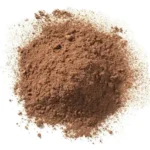


Lignosulfonate is a conventional anionic concrete admixture that may provide cement-particle dispersion, moderate water-reduction support and set-control effects in suitable mixtures. Performance is governed by the exact lignosulfonate grade, cement chemistry, supplementary cementitious materials, aggregate moisture, water quality, temperature and admixture combination. It should be selected through comparative mix testing rather than a universal dosage or guaranteed performance percentage.
How lignosulfonate acts in cementitious systems
Lignosulfonate molecules contain sulfonate and other polar functional groups that can adsorb on cement and mineral surfaces. This adsorption may reduce particle attraction and improve dispersion, making part of the mixing water more effective for flow and workability. The same surface interaction can also influence early hydration and setting behaviour.
The practical result is formulation-dependent. Adsorption changes with cement mineralogy, sulfate balance, alkali content, fineness and supplementary cementitious materials. Residual sugars, counter-ion, molecular-weight distribution, solids content and impurities in the offered grade can also alter water demand, air content and setting response.
Plasticizer is not the same as high-range superplasticizer
Conventional lignosulfonates are generally evaluated where moderate dispersion and workability control are required. SNF and polycarboxylate-ether systems are separate admixture families commonly considered when a project requires higher water reduction or more specialized flow performance. They should not be described as interchangeable.
A lignosulfonate may also be used as one component of a formulated admixture package, but compatibility with accelerators, retarders, air-entraining agents, defoamers, SNF, PCE and other ingredients must be demonstrated. Combining materials without testing can change slump, air, setting or strength development.
Variables to review before selecting a grade
- Cementitious system: cement type and source, sulfate balance, SCM type and replacement level, and total binder content.
- Aggregate and water: grading, absorption, moisture correction, clay contamination, recycled water and dissolved salts.
- Admixture identity: sodium, calcium or other counter-ion; powder or liquid form; active solids; pH; reducing sugars; ash and insoluble matter.
- Production conditions: batching sequence, mixing energy, transport time, concrete temperature and expected placement window.
- Required outcome: slump, water demand, setting window, air content, finishability, pumping and strength acceptance criteria.
Recommended comparative mix-testing workflow
- Establish a control mixture using the actual cement, SCMs, aggregates, water and production sequence.
- Confirm the current TDS, SDS and representative COA for the exact lignosulfonate grade.
- Select starting trial levels only from the supplier’s current technical document. State whether the calculation is based on as-supplied product or dry solids and on total cementitious material.
- Prepare graded laboratory mixtures under controlled temperature and mixing time.
- Measure fresh properties such as slump or flow, water demand, air content, unit weight, bleeding and setting time.
- Evaluate hardened properties at the project-specified ages, including compressive strength and any required durability indicators.
- Confirm the selected formulation in a controlled plant trial before routine production.
The ASTM C494/C494M specification for chemical admixtures emphasizes testing with the materials, proportions, batching sequence and physical conditions proposed for the work. Applicable standards and acceptance criteria must be confirmed for the buyer’s market and project.
Dosage and performance claims
No universal dosage, water-reduction percentage, strength gain, cement-saving figure or setting-time delay is valid for every lignosulfonate and concrete mixture. A numerical starting range may be published only when it comes from a current technical document for the exact grade and clearly defines its calculation basis. Water reduction, strength and set behaviour are measured results, not guaranteed consequences of a stated dosage.
The former fixed dosage, water-cement ratio, water-reduction, strength-increase, cement-saving and setting-delay figures on this page were removed because their grade identity, test method and mixture conditions could not be verified.
Published research data: water reduction and dosage context
The following values are independent literature results for the stated cementitious systems. They are not Green Agrochem product specifications, universal recommended dosages or performance guarantees.
| Reported result | Material or system | Conditions and basis | Source | How to interpret it |
|---|---|---|---|---|
| Calcium lignosulfonate evaluated at 0.25–0.40 mass % of binder | Low-sugar softwood calcium lignosulfonate with two Portland cements | Paste rheology, hydration and setting; immediate versus 10-minute delayed addition | On the effect of calcium lignosulfonate on the rheology and setting time of cement paste, Cement and Concrete Research, 2017 | Dosage and addition timing changed adsorption, rheology and retardation; this is a study condition, not a production recommendation. |
| 11.9% water reduction at equal slump in the tested system; the paper also summarizes earlier results of 3.5–11% at 0.4–0.8% lignosulfonate-based plasticizer | Concrete with Ca-, Mg-, K- and Na-lignosulfonate-based plasticizers and different cements | Water adjusted to equal slump; cement composition, counter-ion, sugar content and molecular mass varied | Effects of Ca-, Mg-, K-, and Na-lignosulfonates on the behavior of fresh concrete, Construction and Building Materials, 2017 | The result supports material-specific water reduction and shows why a universal percentage should not be promised. |
Application rule: choose the starting trial range from the current document for the exact commercial grade, define whether dosage is as-supplied or dry solids and base it on total cementitious material. Verify slump, water demand, air, bleeding, setting, strength and compatibility in the customer’s actual mix.
Limitations and troubleshooting
Excessive or incompatible addition can contribute to extended setting, unexpected air, bleeding, segregation or delayed early-strength development. Poor response can also reflect cement-admixture incompatibility, inaccurate moisture correction or an undefined active-solids basis rather than the lignosulfonate family alone. If results shift between cement deliveries, repeat the control comparison and review the COA.
Do not infer non-corrosiveness, freeze-thaw durability, impermeability, safety or environmental performance from the product name or biomass origin. Review the current SDS, chloride and other relevant specifications, local requirements and project testing.
Industrial product and application support
This ranked ChinaLignin URL is retained as a technical overview while concrete and industrial procurement are handled by the Green Agrochem Industrial Chemicals division. Continue with the LigninCorp concrete-admixture selection guide, review the lignosulfonate water-reducer technical page, or compare the documented sodium lignosulfonate product grades.
Information to include in an enquiry
Provide cement and SCM sources, mix proportions, aggregate condition, water source, current admixtures, target fresh and hardened properties, concrete temperature, transport time, applicable test standard, preferred product form, document requirements and destination market. These inputs support responsible grade selection and a defensible trial plan.