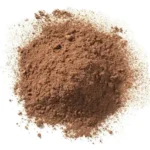

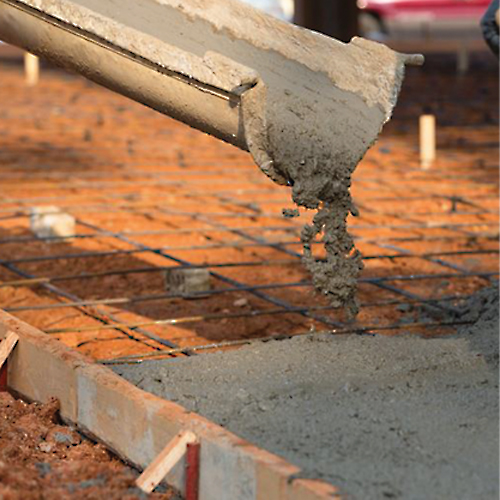
Lignosulfonate concrete set retarders are conventional admixture components used when a concrete producer needs more control over workability and setting behaviour. Their response is not fixed: it depends on the lignosulfonate grade, cement chemistry, supplementary cementitious materials, temperature, water content, addition sequence and the rest of the admixture system. Selection should therefore be based on controlled comparison with the actual project materials, not on a universal setting-delay or water-reduction percentage.
How lignosulfonates influence cement hydration
Lignosulfonate molecules can adsorb on cement and early hydration products. This adsorption changes particle interaction and may slow access of water and dissolved ions at reactive surfaces. The same material can also disperse cement agglomerates, which affects flow and the apparent water demand of the mix. Retardation and dispersion occur together, but their relative importance varies by grade and binder system.
Residual sugars, molecular-weight distribution, counter-ion, pH, inorganic salts and solids content can all influence performance. This is why two products carrying the generic name “lignosulfonate” should not be assumed to give the same setting profile. The correct comparison is grade-to-grade under one documented test protocol.
Where controlled retardation may be useful
- Warm-weather placement: additional control may be required when elevated material and ambient temperatures accelerate loss of workability or setting.
- Ready-mix transport: delivery time, discharge sequence and site delays can make predictable workability and set control important.
- Mass and staged placements: the construction sequence may require a defined working window and careful management of lift interfaces.
- Pumped or complex placements: stable rheology and predictable finishing time may matter where access or placement geometry is difficult.
These are screening contexts, not automatic product recommendations. Project specifications, local standards and the concrete producer’s quality plan govern whether a retarding or water-reducing admixture is appropriate.
Variables that change the response
| Variable | Why it matters | What to record |
|---|---|---|
| Cement and SCM chemistry | Mineralogy, alkali and sulfate balance affect adsorption and hydration | Supplier, mill, lot, composition and replacement levels |
| Temperature | Hydration rate and admixture demand change with material and ambient temperature | Concrete, constituent and laboratory temperatures |
| Admixture grade | Solids, residual sugars, salts and molecular distribution differ | TDS revision, COA values, lot and dry-solids basis |
| Addition sequence | Direct contact and mixing energy affect dispersion and interaction | Order, timing, mixing duration and water split |
| Other admixtures | Air entrainers, accelerators, superplasticizers and viscosity modifiers may interact | Product identities, addition levels and sequence |
| Aggregates and water | Moisture, fines, clay and dissolved ions can alter demand and stability | Moisture corrections, fines, water source and quality |
Recommended qualification workflow
- Define the control mix. Fix binder, aggregate, water, admixtures, temperature and mixing procedure before comparing lignosulfonate grades.
- Confirm the addition basis. Distinguish as-supplied product from dry solids and state whether the percentage is based on total cementitious material.
- Run a stepped screening series. Include an untreated control and several supplier-supported starting conditions rather than one isolated trial.
- Measure fresh properties over time. Record slump or flow, temperature, air content, unit weight, bleeding, segregation and the required workability window.
- Measure setting and hardened properties. Use the project’s specified methods for setting behaviour, early and later strength and any durability-related acceptance criteria.
- Check robustness. Repeat promising conditions across realistic temperature, cement-lot and moisture variation before plant use.
Dosage, delay and water reduction must be evidence-based
A setting-time delay, water-reduction percentage or cost saving is an application result—not a guaranteed property of lignosulfonate. A numerical result is meaningful only when the exact grade, dosage basis, control mix, cementitious materials, temperature, mixing procedure, test method and result are identified. Without those details, the technically correct statement is that lignosulfonate may extend setting time and modify water demand, with the magnitude established by comparative testing.
Use a numeric addition level only when the current supplier TDS or another identified technical document supports it for the exact grade. Present it as a supplier-recommended starting trial range, define the calculation basis and require laboratory and plant validation. Do not relabel an unsupported performance claim as “recommended dosage.”
Common failure modes and corrective checks
- Excessive delay: verify dry-solids addition, residual-sugar variability, temperature and interaction with supplementary cementitious materials.
- Unexpected air: measure air content over time and check compatibility with the air-management system.
- Weak early strength: separate the effects of delayed hydration, water content, air and curing conditions before assigning the cause.
- Rapid slump loss: review cement lot, mixing energy, sequence and compatibility with other water reducers.
- Bleeding or segregation: evaluate water content, grading, paste volume and viscosity rather than increasing admixture blindly.
Lignosulfonate versus other admixture options
Lignosulfonate-based systems can be appropriate where conventional workability and set control are required. Projects demanding high-range water reduction, very long slump retention, rapid early strength or tightly controlled air may require a different admixture family or a formulated blend. Selection should compare complete performance against project requirements rather than assuming that one chemistry is universally superior.
For related technical background, review the lignosulfonate concrete plasticizer guide. Industrial product and application enquiries belong to the Green Agrochem Industrial Chemicals Division: see its concrete-admixture application guide, lignosulfonate water-reducer guide and sodium lignosulfonate product page.
Published research data: dosage, water reduction and setting
The following results show why lignosulfonate dosage and performance must be tied to the tested cementitious system. They are independent literature results—not Green Agrochem product specifications, universal recommended dosages or performance guarantees.
| Reported result | Material or system | Conditions and basis | Source | How to interpret it |
|---|---|---|---|---|
| Calcium lignosulfonate evaluated at 0.25–0.40 mass % of binder | Low-sugar softwood calcium lignosulfonate with two Portland cements | Cement-paste rheology, hydration and setting; immediate versus 10-minute delayed addition | On the effect of calcium lignosulfonate on the rheology and setting time of cement paste, Cement and Concrete Research, 2017 | The dosage and addition time affected adsorption, rheology and retardation; it is not a universal production range. |
| 11.9% water reduction at equal slump in the tested system; earlier studies cited 3.5–11% at 0.4–0.8% addition | Concrete containing Ca-, Mg-, K- or Na-lignosulfonate-based plasticizers and cements with different chemistry | Water adjusted to equal slump; cement composition, lignosulfonate cation, sugar content and molecular mass varied | Effects of Ca-, Mg-, K-, and Na-lignosulfonates on the behavior of fresh concrete, Construction and Building Materials, 2017 | This supports a material-specific water-reduction result, not the former universal 9–13% claim. |
| Initial set increased from 16.8 to 28.5 h and final set from 25 to 35 h at 0.21% lignosulfonate | Controlled low-strength material (CLSM) | Study-specific CLSM mixtures; setting response increased with lignosulfonate content | Controlled low strength material modified with lignosulfonate, International Journal of Geo-Engineering, 2024 | The result demonstrates strong system dependence and must not be generalized to ordinary structural concrete. |
Interpretation: these figures were reported for the stated materials, dosage bases and test conditions. They do not establish the performance of an offered commercial grade. Select the starting trial range from the current document for the exact grade, then verify water reduction, initial and final set, air, bleeding, strength and compatibility with the customer’s cement, supplementary materials, aggregates, water, temperature and admixture package.
The former generic claim of 8–10% cost savings is not reproduced because a percentage saving requires a current project-specific cost model. Compare delivered admixture cost, active dosage, water and cement changes, production cycle, strength compliance, rejected batches, storage and logistics instead.
Documents and information for supplier review
- Current TDS, SDS and representative COA for the proposed grade
- Solids or moisture, pH, inorganic salts, insoluble matter and declared test methods
- Recommended starting trial range with dry-solids or as-supplied basis clearly defined
- Packaging, storage, shelf-life and cold- or heat-exposure limits
- Project mix details, target working window, temperature range and required acceptance tests
Send the mix context and document requirements to info@greenagrochem.com for routing to the appropriate industrial technical team.