
Lignosulfonate in Asphalt and Bitumen Emulsions: Technical Overview

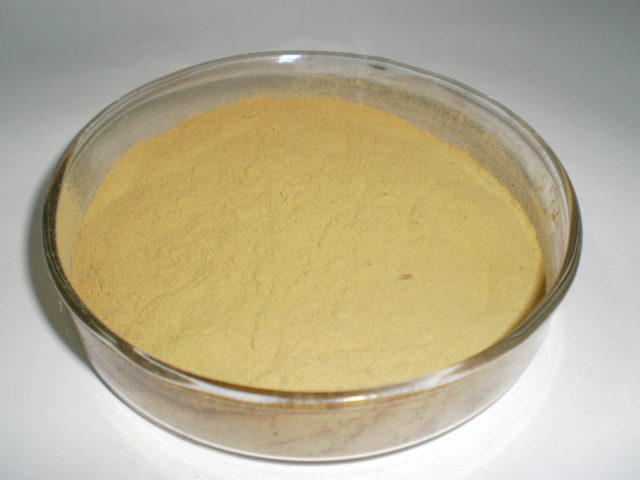
Calcium lignosulfonate

Lignosulfonate in Asphalt and Bitumen Emulsions: Technical Overview

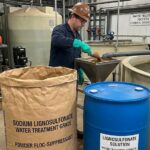
Lignosulfonate may be evaluated as a formulation aid in selected asphalt, bitumen-emulsion and road-material systems. Its suitability depends on the bitumen source, emulsifier package, aggregate chemistry, water quality, pH, temperature and production process. It should therefore be qualified against the actual formulation rather than selected from a universal dosage or performance claim.

Where lignosulfonate may contribute

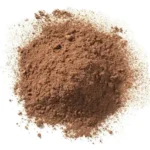
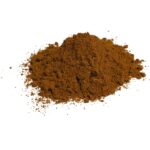
Lignosulfonates are water-soluble anionic polymers derived from sulfite pulping. Depending on grade and formulation, they may support dispersion of mineral fines, wetting of solid surfaces, emulsion processing or auxiliary binding. These functions are not interchangeable: a grade that performs well in an aqueous mineral suspension may not provide the required stability in a cationic bitumen emulsion.

Potential evaluation areas include selected asphalt-emulsion systems, road-surface treatments, mineral-filled formulations and compatible crack-filling or binder packages. The role of the lignosulfonate must be defined before testing—for example, dispersing fines, supporting viscosity control, assisting wetting or contributing to temporary particle cohesion.

Compatibility is the first screening question

Asphalt emulsions are sensitive multicomponent systems. Lignosulfonate charge density, counter-ion, molecular-weight distribution, residual sugars, ash, moisture, colour and solution pH can affect interaction with the primary emulsifier and mineral surface. Cationic emulsions require particular care because an anionic lignosulfonate can interact with the emulsifier, change droplet charge or cause premature destabilization.

Before plant use, screen the exact lignosulfonate grade with the intended bitumen, emulsifier, water and aggregate. Review mixing order, shear, temperature and holding time. Visual appearance alone is insufficient; a formulation can look uniform immediately after preparation yet separate, cream, settle or change viscosity during storage.

Recommended qualification workflow

  1. Define the target function. Record whether the project needs dispersion, emulsion support, wetting, viscosity adjustment, mineral-fines control or auxiliary binding.
  2. Establish a control. Prepare the current formulation without lignosulfonate under the same mixing and temperature conditions.
  3. Use graded additions. Select starting levels from the current supplier technical document and express them on a clearly stated as-supplied or active-solids basis.
  4. Measure relevant properties. Depending on the system, compare viscosity, sieve residue, particle or droplet stability, storage separation, coating of aggregate, breaking behaviour, adhesion and water sensitivity.
  5. Confirm at process scale. Laboratory compatibility does not replace a controlled production trial. Check pumpability, dosing accuracy, mixing sequence, temperature exposure and storage performance.

Grade and document review

Request a current TDS, SDS and representative COA for the offered grade. Important review items can include solids or moisture, pH, ash, counter-ion, bulk density or solution viscosity, insoluble matter and any limits relevant to the application. Liquid and powder products must not be compared only by delivered weight; calculate additions on the same active-solids basis.

Do not assume that sodium, calcium or ammonium lignosulfonate grades are direct substitutes. Counter-ion and manufacturing history can influence solubility, ionic interactions, colour and handling. The appropriate grade is the one that passes the buyer’s formulation and process tests.

Limitations and responsible claims

Lignosulfonate does not universally improve asphalt strength, water stability, warm-mix performance, foam stability or production cost. Results depend on the complete formulation and test method. There is no defensible universal addition percentage for all asphalt systems, so the former fixed-dose statement has been removed. Safety, environmental and regulatory conclusions must be based on the current SDS, local requirements and the intended use—not on the material’s biomass origin alone.

Industrial application support

This ChinaLignin page is retained as a technical overview because it already has search visibility. Asphalt and bitumen-emulsion projects are handled by the Green Agrochem Industrial Chemicals division. For formulation variables, grade screening and enquiry requirements, use the LigninCorp asphalt and bitumen-emulsion application guide. For broader road-material and dust-control product routing, see the LigninCorp road-maintenance and dust-control hub.

Information to provide for grade review

Send the bitumen type and source, emulsion class, emulsifier chemistry, water quality, aggregate or filler details, solids content, pH, processing temperature, mixing sequence, storage period, target test method and required documentation. These inputs allow a candidate grade and a controlled trial plan to be recommended without presenting an unverified universal dosage.

Leave a Reply