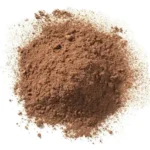

Naphthalene-based dispersants are anionic materials used to help separate and stabilise solid particles in aqueous systems. The term covers more than one commercial chemistry and should not be treated as a complete product specification. In industrial and formulation markets it often refers to sulfonated naphthalene-formaldehyde condensates supplied under names such as SNF, NSF, PNS, NNO or MF. The exact identity, molecular distribution, counter-ion, inorganic-salt profile and intended use must be confirmed from the current TDS, SDS and COA for the selected grade.
This page explains the major types, dispersion mechanism and selection workflow. It does not imply that one naphthalene-based product is interchangeable across pesticide formulations, dyes, pigments, concrete or other industrial systems.
What counts as a naphthalene-based dispersant?
Commercial terminology is inconsistent. Condensed naphthalene sulfonates are generally produced through sulfonation, controlled condensation and neutralisation, creating a distribution of sulfonated aromatic species rather than one discrete small molecule. Product design and process control influence molecular distribution, residual salts, colour, supplied form and performance.
- SNF/NSF/PNS: abbreviations commonly used for sodium naphthalene sulfonate formaldehyde condensate or closely related wording. These labels can appear on both formulation and concrete-admixture grades.
- NNO: a trade designation often used for naphthalene-sulfonate dispersant grades in dye, pigment and particulate formulations. It is not, by itself, proof of a particular sulfate limit, molecular structure or performance level.
- MF: a commercial designation used for certain condensate dispersants, often associated with dye and formulation applications. Supplier naming and composition should be verified.
- Small-molecule naphthalene sulfonates: may function differently from condensed products and should not be assumed to provide the same adsorption or rheology response.
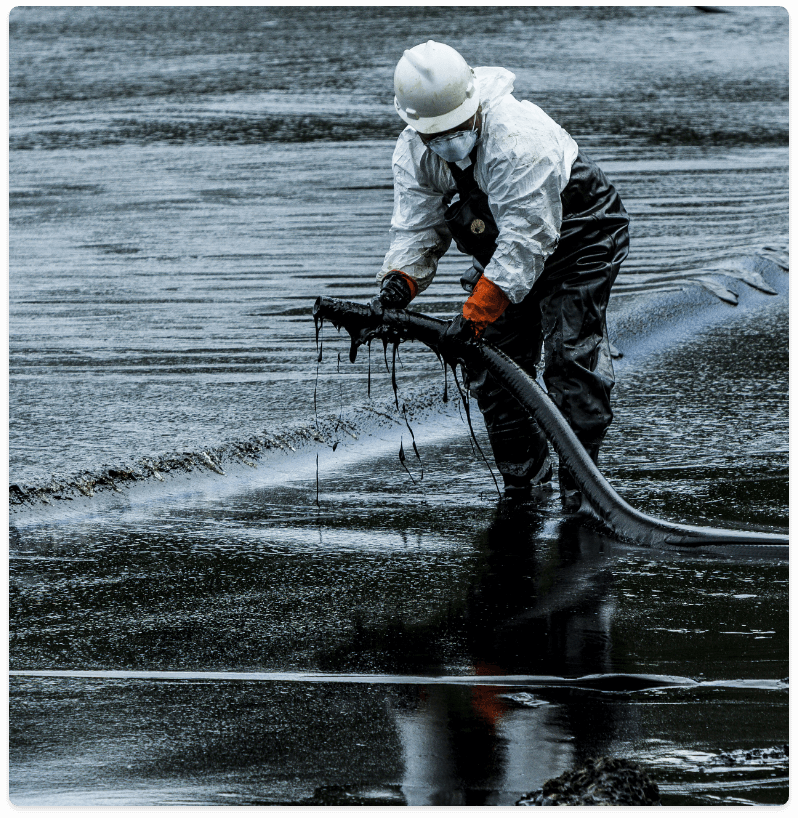
Naphthalene-based formulation dispersants are also different from marine oil-spill dispersant packages. Oil-spill products are specialised mixtures assessed for a specific regulatory and environmental use. A powdered SNF, NNO or MF grade must not be represented as suitable for marine spill response without explicit product evidence and approval.
Dispersion mechanism
Sulfonate groups provide anionic character in water. When the aromatic portion of a compatible molecule adsorbs on a particle surface, charged groups extend into the aqueous phase. The resulting surface charge and hydration can increase electrostatic repulsion, reduce reagglomeration and change apparent viscosity. Condensate molecular distribution may also influence the extent and persistence of adsorption.
Successful dispersion requires more than adding a surfactant. The result depends on particle mineralogy or organic chemistry, surface area, particle-size distribution, solids loading, pH, ionic strength, hardness ions, temperature, shear energy, addition sequence and interactions with wetting agents, binders, rheology modifiers, antifoams and electrolytes. A material that reduces viscosity in one formulation may increase foam or destabilise another.
Application families and correct routing
Pesticide and agrochemical formulations
In wettable powders, water-dispersible granules and suspension concentrates, a naphthalene-sulfonate condensate may be screened for dispersion, wet-sieve residue, suspensibility, viscosity and redispersibility. It is not automatically a wetting agent, emulsifier or rheology modifier. For grade documentation and samples, see the Dispersant NNO product page and the detailed pesticide-formulation qualification guide.
Dyes, pigments and colour systems
Candidate grades are evaluated during grinding, standardisation, dye-bath preparation or pigment-concentrate manufacture. Relevant endpoints can include particle size, viscosity, filtration, shade, colour strength, foam, electrolyte tolerance and compatibility with the binder or let-down system. Selection should follow the actual dye or pigment and process conditions; a universal dosage or guaranteed colour result is not technically defensible.
Concrete and cementitious systems
Some condensed naphthalene sulfonates are formulated as concrete water reducers or superplasticizers. Performance depends on cement chemistry, supplementary cementitious materials, aggregate moisture, admixture interactions, temperature, mixing and the defined dosage basis. A dye- or pesticide-grade dispersant should not automatically be specified for concrete. Industrial concrete-admixture selection belongs with the LigninCorp SNF superplasticizer technical and procurement resource.
Other particulate systems
Ceramics, mineral slurries, leather auxiliaries, rubber or latex processes and other industrial systems may use related dispersant chemistries. Suitability must be established against the actual substrate, process and downstream requirement. Cross-industry use of the same trade name does not establish grade equivalence.
How to compare candidate grades
Request document-controlled information for the exact product. Depending on the application, the comparison may include supplied form, active or solids basis, moisture, pH with solution concentration, inorganic salts, water insolubles, bulk density, particle size, solution clarity and a supplier-defined dispersion test. “Purity,” “active content” and “solids” are not interchangeable unless the methods and calculation basis are stated.
Numeric specifications should only be published or used for approval when supported by the current grade-specific document. A value from a competitor, a different application grade or an undated catalogue is not a valid substitute. Safety, regulatory and environmental statements must follow the current SDS and evidence applicable to the destination market.
Controlled qualification workflow
- Define the system. Record the particle, liquid phase, solids level, pH, water quality, temperature, equipment, addition sequence and current benchmark.
- Select relevant candidates. Confirm that each supplier has positioned the exact grade for the intended formulation or industrial process.
- Screen addition levels. Use a supplier-supported starting trial range only when the exact document, revision, grade and calculation basis are known. Otherwise establish a laboratory series without presenting it as a universal recommendation.
- Measure the failure mode. Use suitable tests such as viscosity versus shear, particle size, wet-sieve residue, suspensibility, sedimentation, redispersibility, filtration, foam, flow or application-specific performance.
- Test compatibility and ageing. Challenge relevant pH, salts, hardness, temperature and co-formulants, then repeat measurements after accelerated and real-time storage where applicable.
- Confirm at scale. Recheck mixing energy, residence time, addition order, process temperature and raw-material variability before production approval.
Common selection errors
- Choosing by the abbreviation NNO, MF or SNF without reviewing the exact specification
- Treating a dispersant as a complete wetting, suspension, emulsion or rheology package
- Transferring a dosage or performance percentage from an unrelated formulation
- Ignoring water hardness, electrolyte loading, pH or addition sequence
- Increasing dosage before identifying whether the problem is wetting, milling, adsorption, viscosity or ageing
- Approving a sample without connecting it to a controlled commercial grade and change-notification process
Documents and enquiry information
Before approval, request the current TDS, market-appropriate SDS, representative or batch COA, packaging and storage information, shelf-life basis and any application-specific regulatory documents. For a focused recommendation, provide the intended use, formulation type, particle or active ingredient, solids level, water quality, pH, temperature, process equipment, current benchmark, target test methods and destination market. Contact info@greenagrochem.com.