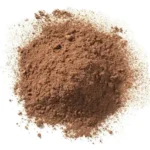

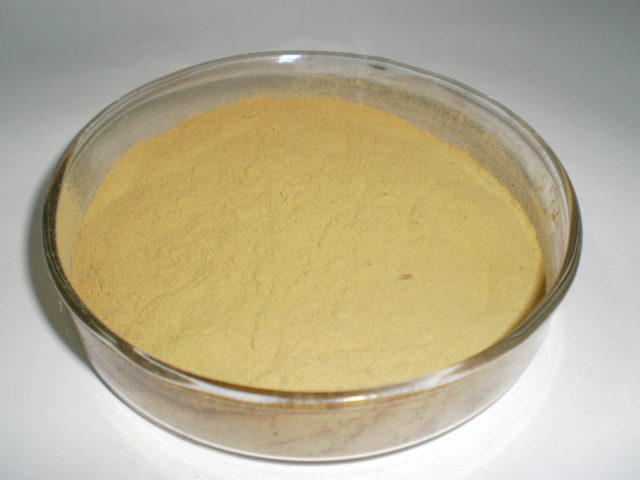
Lignosulfonates are water-soluble, anionic materials derived mainly from lignin in sulfite-pulping streams. They are not one pure molecule. Commercial products contain a distribution of sulfonated lignin fragments whose composition varies with biomass source, pulping conditions, recovery and subsequent processing.
Their combination of aromatic polymer structure, sulfonate groups and other oxygen-containing functional groups allows them to interact with water, particles and surfaces. This is why different lignosulfonate grades are evaluated as dispersants, binders, formulation aids, complexing agents and conventional concrete-admixture components.
How are lignosulfonates produced?
Lignin is a structural polymer in wood and other lignocellulosic biomass. During sulfite pulping, lignin is fragmented and sulfonated, increasing its water compatibility. The lignosulfonate-containing process stream is then purified, concentrated or dried, depending on the intended grade and delivery form.
Sulfonated lignin can also be manufactured from kraft lignin or other isolated lignins through subsequent chemical modification. These products should not automatically be assumed equivalent to sulfite-derived lignosulfonates: functional-group distribution, molecular-weight profile, ash, salts and application behavior may differ.
Are lignosulfonates single chemicals?
No. A simplified structural drawing is useful for showing aromatic units and sulfonate groups, but it cannot represent every molecule in a commercial sample. The following variables can influence performance:
- feedstock and pulping route;
- degree and distribution of sulfonation;
- molecular-weight distribution;
- phenolic, hydroxyl, carboxyl and methoxyl groups;
- counter-ion and inorganic-salt content;
- residual sugars or reducing substances;
- pH, solids, moisture and insoluble matter.
For formula conventions and molecular interpretation, see the sodium lignosulfonate formula guide.
Main lignosulfonate types
| Type | General characteristic | Selection note |
|---|---|---|
| Sodium lignosulfonate | Highly water-compatible sodium salt supplied in powder or liquid form | Compare pH, ash, reducing substances, insolubles and application response |
| Calcium lignosulfonate | Calcium salt used across binding, dispersion and conventional admixture systems | Verify calcium contribution, solubility and end-use compliance |
| Magnesium lignosulfonate | Magnesium counter-ion grade used in selected formulation and agricultural systems | Confirm magnesium basis, solids and compatibility |
| Modified/sulfonated lignin | Products adjusted through sulfonation, oxidation, fractionation or other treatment | Do not infer performance from the generic name; review grade-specific evidence |
How do lignosulfonates function?
Particle dispersion
The polymer can adsorb on particle surfaces. Ionized sulfonate groups contribute negative charge, while the polymer layer may provide additional separation between particles. The result can be lower slurry viscosity or improved suspension behavior in a suitable system. Performance depends on substrate, solids loading, pH, water hardness, electrolytes and competing additives.
Binding and agglomeration
Polymeric character and surface interactions may contribute binding or green strength in pellets, granules and formed mineral products. Moisture, compaction, drying and substrate composition must be controlled during comparison.
Complexing and formulation support
Oxygen-containing functional groups can interact with metal ions. In agricultural formulations this may support selected micronutrient or granulation systems, but stability and plant availability cannot be inferred from lignosulfonate presence alone. The complete formulation, metal ratio, pH, water quality and applicable regulation require evaluation.
Concrete dispersion and set modification
Suitable grades may adsorb on cement particles and improve dispersion. Conventional lignosulfonate admixtures can also influence air and setting behavior. They should not be described as universal high-range superplasticizers, and performance must be confirmed with the actual cementitious materials.
Where are lignosulfonates used?
| Application area | Potential function | Correct next route |
|---|---|---|
| Fertilizer and agricultural inputs | Granulation, dispersion or formulation/complexing support | ChinaLignin agriculture division |
| Feed pellets, aquafeed and pet food processing | Pellet/kibble binding and processing aid | LigninChina animal-nutrition division |
| Concrete, ceramics, mining, dust control and industrial binders | Dispersion, water reduction, binding or process support | LigninCorp industrial division |
| General chemistry, comparisons and technical references | Neutral knowledge and specification interpretation | Lignosulfonate application guide |
What should a buyer compare?
- current TDS and a recent batch COA;
- delivery form, moisture or total solids;
- pH with test concentration and temperature stated;
- lignosulfonate content and analytical method;
- ash, sulfate, insolubles and reducing substances where relevant;
- bulk density, viscosity or particle size for handling;
- application-specific test method and acceptance target;
- SDS, packing, shelf life, traceability and required compliance documents.
How should dosage and performance data be used?
Keep useful numbers, but label their evidence class. A value may be an exact TDS specification, a typical value, a supplier-recommended starting trial range, a defined laboratory/plant result, an external literature result or an unverified historical figure. These categories are not interchangeable.
Use grade-specific supplier guidance as a starting point, establish a dosage-response curve and validate under the actual process conditions. No generic dosage can guarantee the same dispersion, binding, water reduction or stability across all formulations.
Historical data note
An older version of this page stated global production of approximately 800,000 tonnes of lignosulfonates and 15,000 tonnes of sulfonated lignin, and referred to 90–95% recovery in one precipitation description. These figures are retained here only as unverified historical values: the original publication year, scope, method and source were not provided. They must not be used as current market-size or process-yield data without a traceable source.
Recommended qualification workflow
- Define the required function and measurable success criterion.
- Shortlist grades using current TDS/COA data and document requirements.
- Check compatibility with the real water, substrate and co-additives.
- Test a supplier-recommended starting range alongside a control and benchmark.
- Measure both immediate process response and final-product performance.
- Confirm robustness and handling in a controlled production trial.
Frequently asked questions
Are lignosulfonate and lignosulphonate the same term?
Yes. They are American and British spelling variants. Grade specifications and application evidence—not spelling—determine suitability.
Are all sodium, calcium and magnesium grades interchangeable?
No. Counter-ion, composition, molecular distribution and residual components can affect solution behavior and compatibility.
Are lignosulfonates automatically safe or environmentally harmless?
No material should receive an absolute claim. Review the product-specific SDS, impurity profile, exposure route, intended use and applicable local requirements.
What is the best grade?
The best grade is the one that meets a defined technical target, documentation requirement and cost-in-use objective in the buyer’s actual formulation.