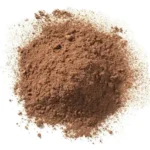


Sodium naphthalene formaldehyde is commonly used as a shortened market name for sulfonated naphthalene-formaldehyde condensate, also known as SNF, NSF or PNS depending on regional and supplier terminology. It is an anionic polymeric dispersant used to separate fine particles in water-based systems. Its best-known application is as a concrete superplasticizer, but selected grades are also evaluated in gypsum, mortar, ceramic, pigment, dye and other industrial formulations.
This page explains where SNF is used, how it works and what a technical buyer should verify. It does not establish that one grade is suitable for every application, and it does not replace the current TDS, SDS, COA or application-specific testing.
What SNF is
SNF is produced by sulfonating naphthalene, reacting the sulfonated intermediate with formaldehyde under controlled conditions, and neutralising and finishing the condensate. Commercial products may be supplied as powders or liquids. Polymer distribution, sulfonation, residual salts, solids content, pH, colour, molecular-size profile and processing history can vary by grade and manufacturer.
The name alone is therefore not a complete specification. Buyers should identify the exact grade, physical form, intended application and batch-control limits before comparing offers.
How the dispersing mechanism works
In a compatible aqueous formulation, SNF adsorbs on particle surfaces and contributes negative charge. Electrostatic repulsion helps separate agglomerated particles and releases water trapped within flocs. The practical result may be lower viscosity at the same water content, increased flow at the same solids level, or a reduction in mixing water while maintaining a target consistency.
The result depends on particle mineralogy, surface chemistry, ionic strength, pH, temperature, water quality, competing admixtures, mixing energy, addition sequence and elapsed time. SNF does not guarantee a fixed water reduction, strength gain or flow-retention period in every system.
Primary use: concrete and cementitious systems
SNF is widely evaluated as a high-range water-reducing admixture component for precast concrete, ready-mix concrete, mortar, grout and related cementitious formulations. Depending on the cement and mix design, it can help increase initial workability or reduce water at a defined workability target. A lower water-to-cementitious-material ratio may support strength and density development, but those outcomes must be demonstrated by controlled mix testing.
- Precast production: screening may focus on initial flow, mould filling, compaction, setting behaviour, early strength and surface quality.
- Ready-mix concrete: evaluate slump development and loss, pumpability, air content, setting time and compatibility with supplementary cementitious materials.
- Mortar and grout: monitor flow, segregation, bleeding, dimensional behaviour and strength under the applicable test method.
SNF can provide strong initial dispersion but may not deliver the same slump-retention profile as a purpose-designed polycarboxylate ether. Selection should reflect the required transport time, temperature, placing method and cost-in-use rather than a generic claim that one chemistry is always better.
Gypsum and dry-mix applications
In gypsum plaster, boards, blocks or moulded products, an appropriate SNF grade may reduce slurry viscosity or help achieve target fluidity with less mixing water. Qualification should include setting time, wet density, entrained air, drying behaviour, surface finish, dimensional stability and dry strength. Cement admixture results cannot be transferred directly to gypsum because the binder chemistry and setting reactions are different.
Ceramic and mineral suspensions
SNF may be screened as a dispersant for ceramic slips, mineral slurries and other high-solids suspensions. Relevant endpoints include viscosity across the operating shear range, solids loading, sedimentation, filtration, spray-drying behaviour, green-body properties and interaction with binders or electrolytes. The optimum dispersant chemistry and addition level depend on the mineral surface and process water.
Pigment, dye and formulation uses
Selected naphthalene-sulfonate condensate grades are used as dispersing or processing aids in dye, pigment, textile and related formulations. These applications may require different molecular distribution, salt content, colour, thermal behaviour and impurity controls than construction grades. Buyers should not assume that an SNF concrete admixture grade is interchangeable with Dispersant NNO or another formulation-specific grade.
Surface and interface applications involving pesticide, dye or pigment formulation belong to the Group’s GreenAgrochem.net division. Industrial SNF product selection and procurement are handled through LigninCorp’s sodium naphthalene formaldehyde product page.
What a buyer should specify
- Product identity: exact grade code, powder or liquid form, intended application and manufacturing basis.
- Key specification: solids or moisture basis, pH, sodium sulfate or other relevant salts, insoluble matter, bulk density or liquid density, and test methods.
- Performance protocol: actual cement, gypsum, mineral, pigment or formulation; control mix; water quality; temperature; mixing sequence; and acceptance criteria.
- Documents: current TDS and SDS, representative COA, regulatory declarations where relevant, and confirmation of change-control practices.
- Supply terms: packaging, palletisation, moisture protection, shelf-life statement, lead time, origin, Incoterm and batch traceability.
Dosage must be grade- and system-specific
A universal fixed dosage should not be used for SNF. A numerical range is appropriate only when it is supported by the current supplier technical document for the exact grade and clearly states its basis—for concrete, whether the percentage is calculated on total cementitious material and whether it refers to as-supplied product or dry solids. In other formulations, the component and calculation basis must likewise be defined.
Treat any supported value as a supplier-recommended starting trial range. Optimise it through laboratory and plant trials using the actual raw materials, temperature, water quality, addition sequence and test method. Water reduction, strength, flow retention, drying time or cost savings are application results, not guaranteed dosage outcomes.
SNF compared with PCE and lignosulfonate
SNF, polycarboxylate ether and lignosulfonate are not direct substitutes in every mix. PCE products may be selected where high efficiency or tailored retention is required. Lignosulfonates may suit moderate water reduction, set-control or cost-performance objectives in compatible systems. SNF remains useful where its initial dispersion, robustness, availability and total formulation economics match the project. Comparative trials should use the same cementitious materials, consistency target, temperature and test schedule.
Qualification workflow
- Define the application, required function and measurable acceptance criteria.
- Review the exact-grade TDS, SDS and representative COA.
- Run controlled laboratory screening against a relevant benchmark.
- Check compatibility, air, setting, retention and downstream process effects.
- Conduct a plant trial and confirm handling, consistency and cost-in-use.
- Agree purchase limits, COA requirements and change notification before routine supply.
For industrial grade selection, sample planning or an application-specific quotation, review the SNF chemistry and selection guide or contact info@greenagrochem.com with the application, required physical form, annual volume, destination and test conditions.