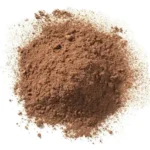


Dispersing Agent NNO is a commercial name used for anionic naphthalene-sulfonate condensate dispersants supplied for dye, pigment and other particulate formulations. Buyers may also encounter descriptions such as sodium naphthalene sulfonate formaldehyde condensate, sodium methylene naphthalene sulfonate or simply NNO. Because naming conventions and grade composition vary between suppliers, the product name alone is not enough to approve a material. Confirm the identity, composition limits and intended application against the current TDS, SDS and batch COA.
This guide explains what NNO means, how it disperses particles and how to qualify a grade without assuming that one specification or addition level is universal. For product availability, documentation and samples, see the Dispersant NNO product and qualification page.
What does NNO mean?
NNO is a trade designation rather than a complete analytical specification. It commonly refers to a sodium salt of a sulfonated naphthalene-formaldehyde condensation product. Some commercial documents associate this material class with CAS 36290-04-7, but the applicable identifier should be taken from the SDS for the exact supplied grade. Molecular-weight distribution, residual inorganic salts, moisture, pH, solubility and colour can differ with raw materials and manufacturing controls.
The abbreviation SNF is also used for sodium naphthalene sulfonate formaldehyde condensates. In practice, suppliers may use NNO and SNF differently: NNO may denote a dispersant grade for dyes or formulations, while SNF may describe the wider chemical family or a concrete-admixture grade. These labels do not by themselves prove a specific molecular structure, sulfate level or performance class. Compare actual specifications and test results instead of relying on the abbreviation.
How Dispersing Agent NNO works
NNO contains sulfonate groups that provide anionic character in water. The aromatic portion of the molecule can associate with suitable particle surfaces, while the charged groups remain exposed to the aqueous phase. Adsorption may increase electrostatic repulsion between particles and help reduce reagglomeration after wetting or milling. The practical result can be lower apparent viscosity, improved particle distribution or better suspension behaviour, but the effect depends on the formulation.
Performance is controlled by particle chemistry, surface area, particle-size distribution, liquid-phase ionic strength, pH, hardness ions, temperature, solids loading, shear history and the presence of other surfactants, binders or electrolytes. A grade that works well with one dye or pigment may not be optimal for another. NNO should therefore be treated as a formulation component to be screened, not as a guaranteed correction for every dispersion problem.
Where NNO is evaluated
- Dye manufacture and dye processing: evaluated during grinding, standardisation or dye-bath preparation where particle dispersion and compatibility with auxiliaries matter. See the dedicated NNO dye-processing selection and testing guide.
- Pigment and colour formulations: screened for viscosity, dispersion stability, colour development and compatibility with the binder or let-down system.
- Wettable powders and aqueous suspensions: considered where rapid wetting, redispersion and resistance to settling or hard caking are required. The complete formulation and market-specific regulatory status must be reviewed.
- Industrial mineral systems: tested where inorganic particles must remain sufficiently separated during mixing, pumping or further processing.
- Cementitious systems: naphthalene-sulfonate condensates are used in some concrete admixtures, but a formulation-grade NNO should not automatically be represented as a qualified concrete superplasticizer. Concrete use requires the correct grade, defined dosage basis and testing under the applicable mix design and standard.
How to compare NNO grades
Begin with document-controlled properties for the exact grade. Depending on the application, relevant items may include appearance, active or solids basis, moisture, pH and test concentration, inorganic-salt limits, water insolubles, solution clarity, particle size, bulk density and any supplier-defined dispersion test. A number copied from another supplier or from a different grade is not a valid specification.
Pay particular attention to the test method and calculation basis. “Active content,” “solids” and “purity” are not interchangeable terms. Likewise, pH is meaningful only with the stated solution concentration and method. If sodium sulfate, chloride or another inorganic component is important to the process, request the limit and analytical method on the current specification and confirm it on the COA where appropriate.
Laboratory qualification workflow
- Define the control. Record the current dispersant, addition basis, raw materials, water quality, solids level, pH, temperature, mixing equipment and addition sequence.
- Screen a concentration series. Use supplier guidance for the exact grade when available, but treat it only as a starting trial range. Do not transfer a dosage from an unrelated dye, pigment, pesticide or cement system.
- Measure process response. Select tests that match the failure mode, such as viscosity versus shear rate, grind time, particle-size distribution, filtration, foam, colour strength, shade, suspensibility, sediment volume or redispersibility.
- Challenge compatibility. Repeat the test with representative water hardness, electrolyte load, pH, temperature and co-formulants. Check both immediate results and ageing behaviour.
- Confirm application performance. A laboratory dispersion result does not automatically predict dyeing, coating, spray, concrete or plant performance. Validate the selected level in the complete formulation and intended process.
- Control the scale-up. Compare mixing energy, order of addition, residence time, temperature control and raw-material variability before approving production use.
Limitations and common failure modes
More dispersant is not always better. Excess addition can change foam, colour, water sensitivity, setting behaviour, downstream separation or interactions with binders and other surfactants. Poor results may also originate from inadequate wetting, insufficient milling energy, an unsuitable addition sequence, high electrolyte loading or a particle surface that does not adsorb the selected dispersant effectively.
Claims such as universal hard-water stability, complete compatibility, non-toxicity, biodegradability, fixed water reduction or guaranteed colour improvement should not be inferred from the NNO name. Safety statements must follow the current SDS, and environmental or regulatory claims require product- and market-specific evidence. Use appropriate dust control and personal protective equipment defined by the supplier’s SDS and the receiving facility’s risk assessment.
Documents to request before approval
- Current TDS identifying the exact commercial grade and revision date
- Current SDS for the destination market and language
- Representative or batch-specific COA with methods and limits
- Statement of packaging, storage conditions and shelf-life basis
- Regulatory or restricted-substance documents required by the intended application
- Sample from the proposed supply route for laboratory and plant validation
Technical enquiry checklist
For a useful grade recommendation, provide the application, particle or dye identity, formulation type, solids level, water quality, operating pH and temperature, mixing or milling equipment, current dispersant and addition basis, target test methods, destination market and required documents. Send these details to info@greenagrochem.com or use the contact page.