
Short answer: sodium lignosulfonate is commonly used as a dispersant, binder, and formulation aid, but safety and environmental handling should be evaluated according to the specific product grade, concentration, impurity profile, safety data sheet, intended application, and local regulations.
This page summarizes practical considerations for buyers, formulators, and agricultural users. It does not replace the product-specific SDS, certificate of analysis, label directions, or local regulatory review.
What Is Sodium Lignosulfonate?
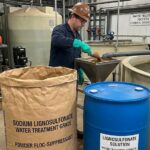
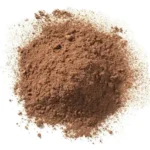
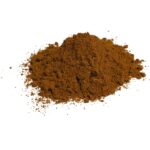
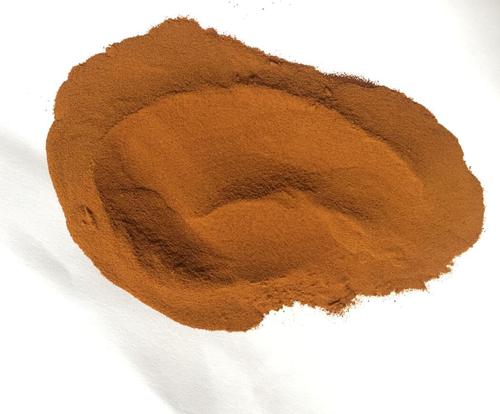
Sodium lignosulfonate is a water-soluble lignin-derived material commonly produced from sulfite pulping streams. In agricultural and industrial contexts, it is often used to help disperse particles, bind granules, improve formulation handling, or support suspension stability.
Safety and environmental profile can vary by source material, processing route, purity, residual salts, moisture, dust level, concentration, and application method. Buyers should review grade-specific documentation rather than relying on broad generic statements.
General Handling Considerations
| Topic | Practical consideration |
|---|---|
| Dust | Powder grades may generate nuisance dust. Use local ventilation, avoid inhalation, and follow SDS guidance for respiratory protection where needed. |
| Skin and eyes | Direct contact may cause mild irritation for some users. Gloves and eye protection are sensible during weighing, mixing, and transfer. |
| Spills | Dry material can be swept or vacuumed using dust-control practices. Liquid or wet material should be contained to prevent uncontrolled discharge. |
| Storage | Keep containers closed, dry, labeled, and away from incompatible materials listed in the product-specific SDS. |
| Use concentration | Risk depends strongly on concentration, exposure route, and application environment. |
Environmental Considerations
Sodium lignosulfonate should not be described as environmentally risk-free. Depending on grade and concentration, releases to drains, soil, or surface water should be managed according to the SDS and local rules. Large uncontrolled releases may affect water quality parameters such as chemical oxygen demand or dissolved oxygen during degradation.
Many lignosulfonate products are used in water-based systems and may be biodegradable under suitable conditions, but biodegradation rate and environmental behavior depend on site conditions, dose, microbial activity, and formulation additives. Avoid broad claims such as fully biodegradable or harmless unless the claim is supported by product-specific test data.
Agricultural and Formulation Use Context
In fertilizer and crop-input formulation, sodium lignosulfonate may be selected as a dispersant, binder, or carrier aid. Some buyers may also compare it with liquid lignosulfonate when the application requires easier dosing or reduced dust during handling.
Formulators should evaluate compatibility with nutrients, active ingredients, water hardness, pH, target crop-use pattern, and processing conditions. China Lignin can help buyers match the appropriate lignosulfonate grade to the intended formulation and handling requirements.
What Documents Should Buyers Request?
- Current Safety Data Sheet for the exact grade and supplier.
- Certificate of Analysis showing key quality parameters.
- Technical Data Sheet with recommended use levels and compatibility notes.
- Regulatory or transport information where required by the importing country.
- Application guidance for agricultural, industrial, or formulation-specific use.
For sourcing or formulation support, see technical support. For background on how lignosulfonates are made, see lignosulfonate production.
FAQ
Is sodium lignosulfonate completely safe?
No material should be treated as completely safe in every condition. Sodium lignosulfonate handling should be based on the exact product grade, SDS, concentration, exposure route, and intended use.
Is sodium lignosulfonate a strong oxidizing agent?
Sodium lignosulfonate should not be broadly described as a strong oxidizing agent unless that classification appears in the specific product SDS. Buyers should rely on the SDS for hazard classification and incompatibility information.
Can sodium lignosulfonate be used in agricultural formulations?
Yes, sodium lignosulfonate is commonly used in formulation contexts such as dispersing and binding, but suitability depends on grade, dose, formulation system, crop-use pattern, and applicable regulations.
Is sodium lignosulfonate biodegradable?
Some lignosulfonate materials may biodegrade under suitable environmental conditions, but biodegradation rate varies. Avoid absolute claims unless supported by product-specific testing.
What should buyers check before ordering?
Buyers should review the SDS, COA, TDS, grade specification, intended application, import requirements, and supplier technical guidance before selecting a sodium lignosulfonate product.