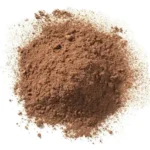

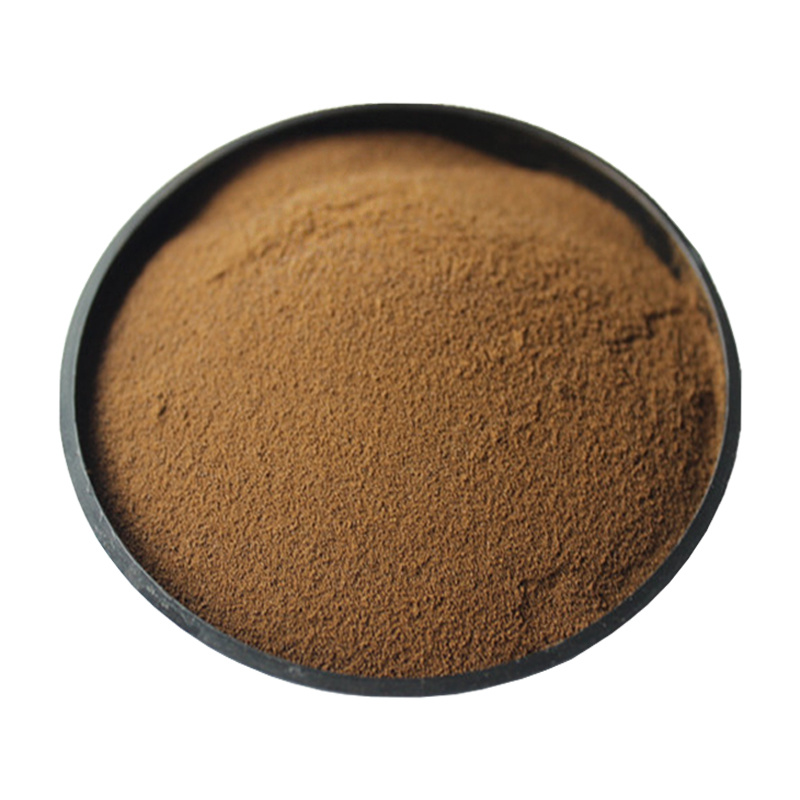
Lignosulfonic acid sodium salt, commonly called sodium lignosulfonate, is a water-soluble anionic lignin derivative supplied as a powder or liquid. It is not a single low-molecular-weight molecule with one universal formula. Commercial products are complex, polydisperse materials whose composition depends on the wood source, pulping route, recovery process, purification, concentration and final grade.
This guide explains how technical and procurement teams should identify the material, interpret supplier documents and qualify a grade for a defined application. It does not replace the current product TDS, SDS, COA or application testing.
Identity and terminology
- Common name: sodium lignosulfonate.
- Systematic description: lignosulfonic acid, sodium salt, or sodium salts of lignosulfonic acids.
- Material type: a distribution of sulfonated lignin macromolecules and associated inorganic and organic constituents, rather than one pure compound.
- Typical physical form: brown to dark-brown powder or aqueous liquid, depending on grade and solids content.
Because lignosulfonate is a variable polymeric material, a simple empirical formula or a narrow universal molecular-weight value can be misleading. Buyers should use the exact supplier grade name, product code, manufacturing basis and current specification when comparing offers. A CAS entry may help identify the substance family, but it does not establish grade equivalence, purity or suitability for a particular use.
How sodium lignosulfonate is produced
Lignosulfonates are traditionally recovered from sulfite pulping streams. The sodium form may be produced directly under a sodium-based process or obtained through ion exchange or neutralisation during downstream processing. Filtration, evaporation, desalting, fractionation, blending and drying can materially change the ash content, molecular-size distribution, colour, solution behaviour and concentration of the finished product.
“Sodium lignosulfonate” therefore describes a product family. Two materials carrying the same general name may behave differently in cement, ceramic slurry, mineral suspension, granulation or agricultural formulation. Qualification should be based on batch-controlled data and application testing, not the name alone.
Functional behaviour
Sulfonate groups support water solubility and anionic charge, while the aromatic lignin structure contributes adsorption and interfacial behaviour. Depending on the system, a suitable grade may act as a dispersing aid, binder, rheology modifier, complexing component or process aid. Performance is governed by the substrate surface, ionic strength, pH, water hardness, competing additives, solids loading, temperature, addition sequence and shear history.
These functions are conditional rather than guaranteed. For example, improved dispersion in one mineral slurry does not establish the same result in another slurry or cement system. A grade that binds pellets effectively may not be the best dispersant. Laboratory screening and plant validation are required before production use.
Documents and properties to verify
- Grade identity: product code, physical form, manufacturing basis and intended application.
- Composition and concentration: solids or moisture basis, lignosulfonate content where defined, and the method used.
- Inorganic constituents: ash and relevant ions or salts, reported with clear units and test methods.
- Solution properties: pH, density for liquids, insoluble matter, viscosity where relevant and measurement temperature.
- Handling characteristics: powder flow, particle size, dissolution procedure, storage conditions, shelf-life statement and packaging.
- Batch evidence: a representative COA and acceptance limits that can be applied to future deliveries.
- Safety and compliance: the current SDS plus application- and destination-market documentation.
Specification values must be read on their stated basis. A liquid solids value cannot be compared directly with a powder moisture value, and a “typical” result is not automatically a contractual limit. Ask the supplier to identify the method, units, tolerance language and document revision.
Application routes
For neutral chemistry, specification comparison and technical background, use the Group’s sodium lignosulfonate technical guide. Industrial buyers evaluating concrete, ceramics, mining, drilling, dust control or industrial binders should review the LigninCorp sodium lignosulfonate product route. Agricultural formulators can use the ChinaLignin agriculture product page. Feed applications require a separately qualified feed-grade product and belong to the Group’s Animal Nutrition division.
Dosage and performance claims
There is no universal dosage for sodium lignosulfonate. A numerical addition level should be published only when it comes from the current technical document for the exact grade and clearly states the calculation basis—for example, as-supplied product, dry solids, binder mass or total formulation mass. Treat such a value as a supplier-recommended starting trial range, then optimise it with the buyer’s actual raw materials, water quality, process conditions and test method.
Water reduction, strength, flow, suspension stability, binding efficiency or other performance percentages are test results, not guaranteed product properties. They require a defined control, formulation, dosage basis, conditions and method. Unsupported fixed outcomes should not be used for purchasing decisions.
Buyer qualification workflow
- Define the required function, formulation, process window and acceptance test before requesting samples.
- Compare current TDS, SDS and representative COA documents for the exact offered grade.
- Screen dissolution, compatibility, rheology, colour and application performance against a control.
- Confirm the preferred addition sequence and a documented starting trial range, if supported.
- Run a plant trial and assess batch consistency, handling, packaging and landed usable cost.
- Agree the purchase specification, change-notification requirements and routine COA checks.
For grade selection or document review, contact info@greenagrochem.com with the intended application, physical form, annual volume, destination market and required test conditions.