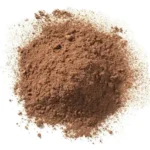


Sodium dibutyl naphthalene sulfonate is primarily used as an anionic wetting and penetrating agent in aqueous formulations and process baths. It can help water contact fibres, powders and porous substrates more rapidly by reducing interfacial resistance and displacing trapped air. Whether it also contributes useful dispersion or emulsification depends on the commercial grade, formulation composition and test conditions.
What the product does—and does not do
The hydrophobic portion of the molecule associates with low-polarity surfaces while the sulfonate group remains compatible with the aqueous phase. This can improve initial wet-out and penetration. It does not prove that the product will provide long-term particle stabilisation, complete detergency, emulsion stability or a specific biological effect. Those outcomes involve additional formulation components and must be measured in the intended system.
Commercial sodium dibutyl naphthalene sulfonate products may differ in active matter, physical form, colour, inorganic salts, residuals and isomer distribution. Buyers should confirm identity, composition and hazard information from the current TDS and SDS for the exact grade rather than treating one formula, CAS description or generic internet specification as universal.
Main use: rapid wetting and penetration
The clearest selection case is an aqueous process in which rapid contact with a difficult-to-wet substrate is required. Evaluation should record wetting time, substrate, product concentration, active-matter basis, water quality, temperature and agitation. A result obtained on one standard fabric or powder should not be assumed to predict behaviour on a different production material.
Textile and fibre processing
Selected grades may be screened in desizing, scouring, bleaching, dyeing or finishing baths where fast and even liquid penetration is important. The useful function is normally wetting or penetration; shade, levelness, wash fastness and cleaning results depend on dyes, fibres, alkali, electrolyte, temperature, equipment and the complete auxiliary package. Test foam, bath stability and compatibility with the actual dye and process chemistry before scale-up.
Agrochemical formulations
In wettable powders, water-dispersible granules and some liquid systems, a suitable grade may assist initial powder wetting. It should not automatically be described as the sole dispersant or emulsifier. Measure wetting, suspensibility, particle-size stability, foam, dilution behaviour and storage using the actual active ingredient, carrier, dispersant, antifoam and local water. Use in pesticide products is also subject to destination-market registration and inert-ingredient requirements; formulation efficacy cannot be inferred from improved wetting alone.
Pigments, coatings and inks
The product can be evaluated for initial pigment or filler wet-out, particularly when dry powder resists contact with water. Long-term dispersion requires control of particle interactions after wetting, so compare it with a dedicated dispersant. Monitor grind development, viscosity, particle size, flocculation, colour strength, gloss, foam and storage stability. Do not claim improved finish or durability without a controlled comparison in the exact coating or ink formulation.
Industrial cleaning and process baths
Rapid surface contact may support compatible alkaline or neutral cleaning systems and other industrial baths. Cleaning performance still depends on soil type, builders, solvents, alkalinity, temperature, contact time, mechanical action and rinsing. Verify material compatibility and foam in the actual equipment. Hard-water, electrolyte, high-temperature or extreme-pH tolerance should be treated as grade-specific test results, not as universal properties of the chemical name.
Emulsion and polymer systems
Sodium dibutyl naphthalene sulfonate may contribute as a co-surfactant in compatible oil–water or polymerisation systems. It cannot be assumed to both stabilise and break emulsions, or to work with every monomer and oil phase. Screen droplet or particle size, viscosity, coagulum, foam, electrolyte response and accelerated storage with the complete formulation and intended process conditions.
Uses that require extra caution
- Concrete: do not confuse this wetting agent with sulfonated naphthalene-formaldehyde superplasticizer. A similar naphthalene-sulfonate name does not establish water-reduction performance.
- Oilfield systems: high salinity, temperature and pressure require dedicated fluid testing; wetting performance alone does not establish drilling-fluid dispersion, corrosion inhibition or enhanced-oil-recovery suitability.
- Water treatment: the product is not automatically a coagulant, scale inhibitor or treatment chemical. Define the treatment objective and verify discharge requirements.
- Food, feed, pharmaceutical or personal-care use: do not infer regulatory acceptance from an industrial grade. Confirm exact-grade compliance for the destination market.
Grade-selection and testing checklist
- Define the required function, substrate and measurable pass/fail criteria.
- Request the current TDS, SDS and representative COA for the exact grade.
- Compare active matter, physical form, pH method, inorganic salts, residuals, colour and wetting test conditions.
- Use a documented supplier-recommended starting trial range only with a defined active/as-supplied/formulation basis.
- Test actual water hardness, pH, electrolyte, temperature, co-formulants, foam and storage.
- Confirm addition sequence, mixing, transfer, packaging contact and scale-up before routine production.
Product and technical resources
For grade information and samples, visit the sodium dibutyl naphthalene sulfonate wetting-agent page. Additional resources cover technical-grade qualification, emulsification screening and bulk procurement.
Send the application, formulation type, required function, trial basis, water quality, operating conditions, annual demand and destination to info@greenagrochem.com. Final use and dosage should follow exact-grade documentation and validation in the buyer’s own formulation.