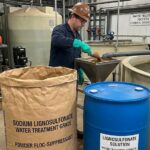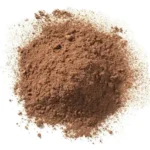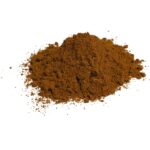

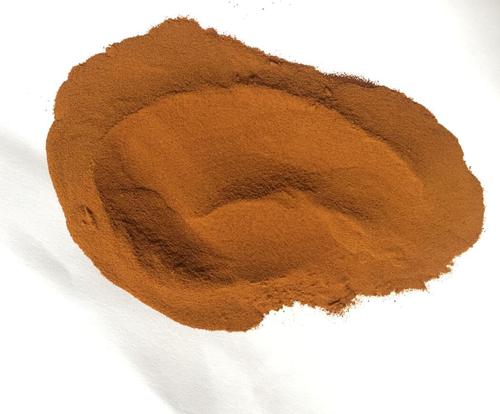
Lignosulfonate concrete admixtures are conventional lignin-based products evaluated for cement dispersion, moderate water-reduction support, workability control and set modification. Choosing a suitable grade requires more than matching a product name: the cementitious system, active-solids basis, counter-ion, impurities, temperature, batching sequence and project acceptance tests all influence the result.
What should a buyer define first?
Start with the required function. A ready-mix producer seeking workable placement time has a different requirement from a dry-mix manufacturer controlling flow, a precast plant managing early demoulding, or an admixture blender building a multicomponent formulation. Define the target fresh and hardened properties before comparing products.
- Required slump or flow and the time over which it must be maintained
- Permitted water content and water-to-cementitious-material ratio
- Acceptable initial and final setting window
- Air-content, bleeding, segregation and finishability limits
- Strength acceptance ages and any project-specific durability tests
- Plant handling, dosing equipment, storage and document requirements
How lignosulfonate grade differences affect selection
Sodium, calcium and other lignosulfonate grades are not automatically interchangeable. Counter-ion, molecular-weight distribution, sulfonation, reducing sugars, ash, moisture or solids, insoluble matter, chloride and solution pH can affect adsorption, dispersion, entrained air, setting behaviour and compatibility with other admixtures.
Powder and liquid products must be compared on a common basis. Record whether a proposed addition is calculated as supplied or as dry active solids and whether the percentage is based on total cementitious material. Without this definition, two apparently identical dosage figures can represent substantially different additions.
Match the admixture family to the performance target
Lignosulfonate is generally considered for conventional water-reducing and retarding functions in suitable mixtures. SNF and polycarboxylate ether are different admixture families used for other performance ranges and rheology requirements. Selection should be based on project testing, not on the assumption that one chemistry is universally superior.
When lignosulfonate is blended with SNF, PCE, air entrainers, accelerators, retarders or defoamers, evaluate the complete package. Interactions can alter slump, air content, setting and early strength. Statements that a lignosulfonate is compatible with all other admixtures are not technically defensible.
Buyer decision and acceptance matrix
| Decision stage | Evidence to request | Acceptance question |
|---|---|---|
| Supplier prequalification | Current TDS and SDS, manufacturing site, declared grade identity and change-control practice | Is the offered material consistently defined and suitable for the intended market? |
| Sample comparison | Representative sample and matching COA, active-solids or moisture basis and declared test methods | Can competing grades be compared on an equivalent basis? |
| Concrete qualification | Control and trial data for slump or flow, air, setting, bleeding and strength | Does the grade meet the project criteria with the actual materials? |
| Plant approval | Batching sequence, dosing accuracy, storage and scale-up records | Is laboratory performance reproducible in production? |
| Routine receipt | Lot-specific COA, agreed limits and exception procedure | Can incoming variation be detected before use? |
This matrix separates supplier documentation from application performance. A specification-compliant batch can still require compatibility testing, while a successful one-off mix does not replace an agreed incoming-quality specification.
Minimum supplier-document review
Request the current TDS, SDS and a representative COA for the exact grade. Confirm product identity, physical form, active solids or moisture, pH, reducing sugars, ash, relevant inorganic salts, insoluble matter, storage guidance and shelf-life statement. For regulated or specification-driven projects, identify the required market documentation before the trial begins.
A COA describes a supplied batch against stated tests; it does not prove performance in the buyer’s concrete. Conversely, a laboratory result from one cement source cannot be treated as a permanent product specification.
Recommended qualification sequence
- Establish the control. Use the actual cement, supplementary cementitious materials, aggregates, water and baseline admixture sequence.
- Define trial additions. Use only the exact grade’s current supplier recommendation and state the as-supplied or dry-solids basis.
- Control preparation. Keep temperature, aggregate moisture, mixing energy, timing and sampling consistent.
- Measure fresh concrete. Depending on the project, record slump or flow, density, air, bleeding, segregation, water demand and setting time.
- Measure hardened concrete. Test strength at specified ages and any durability-related property required by the project.
- Check robustness. Repeat with expected variations in cement delivery, temperature, transport time and production conditions.
- Validate at plant scale. Confirm dosing accuracy, mixing sequence, pumpability, finishing and acceptance results before routine use.
The official ASTM C494/C494M chemical-admixture specification notes the importance of supplementary testing with the materials, proportions, batching sequence and physical conditions proposed for the work. Buyers should confirm the current applicable standard and local project requirements.
Claims that require project evidence
Water reduction, strength development, slump retention, setting delay, air response, impermeability, freeze-thaw performance, cement savings and durability are test results—not automatic product attributes. This page therefore does not publish a universal dosage or fixed effect percentage. Numerical values should appear only when tied to an identified grade, calculation basis, control mix, test method and conditions.
Renewable origin alone does not prove that a specific product or concrete mixture is non-toxic, non-corrosive, environmentally preferable or lower carbon. Review the SDS, impurities, transport, formulation and an appropriate life-cycle boundary before making such claims.
Relationship to the plasticizer technical page
This page focuses on supplier and grade qualification. For a closer explanation of adsorption, cement-system variables and trial design, see the related lignosulfonate concrete plasticizer technical overview. The two pages serve different intents and retain separate self-canonicals.
Industrial products and next steps
Concrete applications and industrial procurement are handled by the Green Agrochem Industrial Chemicals division. Use the LigninCorp concrete-admixture application guide to compare product families, review the sodium lignosulfonate product page for grade routing, and submit project information through the LigninCorp technical enquiry route.
Information to send with an enquiry
Include cement and SCM sources, mix proportions, aggregate moisture and grading, water source, existing admixtures, concrete temperature, mixing and transport time, target fresh and hardened properties, test standards, preferred product form, annual demand, packaging, destination and required TDS/SDS/COA package.