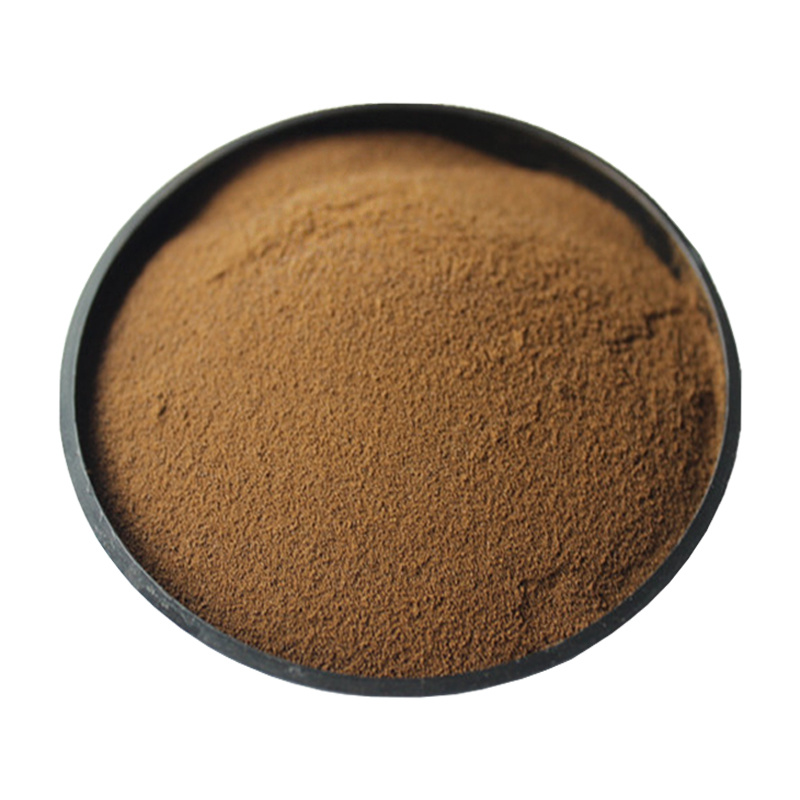
Lignosulfonate dispersants can support the wetting, distribution and redispersion of solid ingredients in selected agricultural formulations. They are anionic, water-soluble polymers derived from sulfite pulping streams, but commercial grades differ materially in counter-ion, molecular distribution, sulfonation, inorganic salts, reducing sugars, pH and insoluble matter. A successful formulation therefore depends on grade selection and controlled testing rather than the generic name alone.
This page focuses on agricultural formulation use: wettable powders, water-dispersible granules, suspension concentrates and selected fertilizer suspensions. For broader pigment, dye, coating and industrial formulation guidance, use the Green Agrochem Surface & Interface Technology guide to lignosulfonate dispersant selection and testing.
What a lignosulfonate dispersant does
A suitable lignosulfonate may adsorb on a particle surface and create a charged, hydrated layer. This can reduce attraction between particles and assist wetting, deagglomeration or redispersion. The observed effect depends on the active ingredient or nutrient, carrier, particle surface, formulation pH, water hardness, electrolyte level, mixing energy and other surfactants.
Dispersion is not the same as permanent suspension. A formulation may still need a compatible wetting agent, rheology modifier, anti-settling system or defoamer. Lignosulfonate should be evaluated as one component of the complete formulation.
Application boundaries
Wettable powders
In a wettable powder, the dispersant is evaluated after the powder enters water. Useful measurements include wetting time, dispersion time, wet-sieve residue, suspensibility, foam and redispersibility after standing. The carrier, milling condition, moisture and packaging stability can change the result.
Water-dispersible granules
For WDG or WG systems, the dispersant must be assessed together with the binder, wetting agent and granulation process. Granule strength, disintegration, residue, suspensibility and storage stability should be balanced. A material that improves granule integrity can still slow disintegration if the formulation or process is not adjusted.
Suspension concentrates
In suspension concentrates, screening should include milling behaviour, viscosity, particle-size distribution, sedimentation, hard packing and redispersion after ageing. Ionic compatibility is particularly important because electrolytes, water hardness and pH may alter adsorption or rheology.
Fertilizer suspensions and micronutrient systems
Lignosulfonates may be considered where insoluble nutrients or mineral components must remain manageable during mixing, pumping and application. High salt loading, polyvalent ions and pH adjustment can materially change performance. Compatibility with chelated or complexed micronutrients should be demonstrated in the actual nutrient matrix.
For a product-family starting point, review the same-site sodium lignosulfonate page and request the current TDS, SDS and representative COA for the exact grade.
Grade-selection variables
- Counter-ion: sodium, calcium, ammonium and magnesium grades contribute different ions and may behave differently in concentrated electrolyte systems.
- Charge and molecular distribution: these influence adsorption, water solubility, viscosity and interaction with particle surfaces.
- Solids or moisture: comparisons should be made on a defined active-solids basis.
- pH and buffering: the supplied grade may shift formulation pH or interact with pH-sensitive ingredients.
- Inorganic salts: sulfate, chloride, ash and other ionic components can affect compatibility and storage behaviour.
- Reducing sugars and residual organics: evaluate where biological stability, odour, colour or chemical reactivity matters.
- Insoluble matter: important for filtration, fine nozzles, wet-sieve residue and visible deposits.
- Colour: lignosulfonates are normally brown; shade contribution must be checked in pale or colour-sensitive products.
Compatibility checks
Lignosulfonates are anionic and should not be assumed compatible with cationic surfactants, cationic polymers or positively charged active ingredients. Nonionic surfactants, salts, antifoams, thickeners, preservatives and solvents can also change adsorption, foam or rheology. Run binary compatibility checks before evaluating the full formulation when a new grade or additive is introduced.
Water quality is part of the formulation. Compare relevant soft, standard and hard-water conditions and record conductivity, hardness and pH. A laboratory result obtained in deionized water is not enough when the commercial product will be diluted in variable field water.
Recommended qualification workflow
- Define the baseline. Record the current grade, active-solids basis, order of addition, water quality, mixing energy, temperature and test methods.
- Verify the candidate document set. Check the current TDS revision, SDS, representative COA, test methods and agreed acceptance limits.
- Prepare a controlled trial matrix. Use a supplier-recommended starting range only when it is documented for the exact grade and the calculation basis is stated. Do not copy a dosage from another supplier or unrelated formulation.
- Measure immediate properties. Select tests appropriate to WP, WDG/WG, SC or fertilizer suspension systems.
- Conduct accelerated and ambient storage checks. Monitor viscosity drift, sedimentation, hard packing, redispersibility, granule disintegration, moisture sensitivity and packaging interaction.
- Challenge the formulation. Repeat under relevant pH, water hardness, electrolyte, temperature and processing conditions.
- Confirm pilot scale. Verify milling, granulation, transfer, filtration, filling and field dilution before production adoption.
Dosage and performance language
There is no universal lignosulfonate dosage for agricultural formulations. A numerical range is useful only when it comes from the current technical document for the exact grade and states whether it is based on total formulation, active ingredient, dry solids or as-supplied product. The final level must be optimized through laboratory and plant trials using the buyer’s materials, equipment and test requirements.
Likewise, suspensibility, viscosity reduction, wet-sieve performance or storage stability are application test results, not guaranteed properties of every lignosulfonate. Report them with the formulation, control, conditions and method.
Limitations, safety and regulatory review
Potential limitations include colour, odour, foaming, electrolyte contribution, natural raw-material variation, moisture sensitivity and incompatibility with cationic components. Biobased origin does not by itself establish biodegradability, low toxicity, crop safety or regulatory acceptance. Safety, use approval, residues and local registration responsibilities must be evaluated from the exact product SDS and market-specific requirements.
For a focused pesticide-formulation discussion, see lignosulfonate in pesticide formulations. Broader formulation chemistry and non-agricultural use cases are handled by the Surface & Interface Technology guide.
Information to include in an enquiry
Provide the formulation type, active ingredient or nutrient, carrier, target solids, particle size, pH, water quality, current dispersant, calculation basis, process equipment, storage conditions and required test methods. To request a grade comparison, current documentation or a sample, contact info@greenagrochem.com.