
Lignosulfonate for Agriculture: Product Selection and Supplier Checklist

sodium-lignosulfonate-light

Lignosulfonate for Agriculture: Product Selection and Supplier Checklist

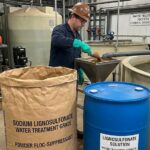
Buying lignosulfonate for agriculture begins with the intended formulation function, not a generic product name. Fertilizer granulation, micronutrient liquids, mineral suspensions, seed coating and soil-applied products can require different counter-ions, solids, impurity limits and validation methods. A supplier should match an exact grade to a defined process and provide current technical documents before a production trial.

This page is a procurement and supplier-qualification checklist. For the broader technical overview, use the lignosulfonates in agriculture application guide.

Define the buying requirement

  • Primary function: binder, dispersion aid, suspension support, complexation support, coating binder or another measurable processing objective.
  • Formulation type: granule, powder, liquid concentrate, suspension, seed treatment or soil-applied product.
  • Raw materials: mineral or nutrient sources, fillers, salts, biologicals and other auxiliaries.
  • Process: order of addition, mixing, milling, granulation, drying, filtration and application equipment.
  • Market: destination country, regulatory category, labelling and documentation requirements.
  • Acceptance tests: measurable limits that determine whether a candidate grade is approved.

Select the lignosulfonate family

Grade factorProcurement questionVerification
Sodium lignosulfonateIs sodium loading acceptable in the formulation and final use?Exact sodium analysis, solids basis and compatibility testing.
Calcium lignosulfonateDoes calcium fit the formulation without creating unsupported nutrient claims?Calcium basis, ash, pH, solubility and batch consistency.
Magnesium lignosulfonateIs magnesium relevant and analytically defined?Elemental analysis, soluble fraction, impurities and regulatory position.
Ammonium or potassium formsDoes the counter-ion support the formulation concept?Exact nutrient basis, stability, labelling and market compliance.
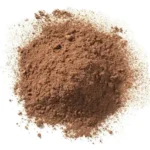
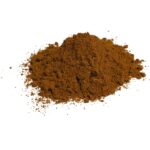
Liquid or powderWhich form best fits storage, dosing, freight and process water?As-supplied solids, density, moisture, handling and landed usable cost.

The counter-ion is only one selection factor. Molecular distribution, sulfonation, reducing sugars, ash, insolubles, pH, colour, odour and manufacturing variation can change performance. Do not approve a grade from a generic name or one isolated specification.

Documents required before approval

  • Current TDS identifying the exact grade, revision and specification limits.
  • Current SDS for handling, storage, exposure and transport review.
  • Representative COA with units, test methods and batch results.
  • Statement of product origin and manufacturing consistency.
  • Applicable regulatory, contaminant and market-access documentation.
  • Packaging, shelf life, storage conditions and change-notification policy.

Specifications such as solids, moisture, pH, ash, inorganic salts, density and insolubles are product properties, not application dosage. They must retain their units, basis, method and limit or typical-value status.

Supplier qualification questions

  1. Can the supplier identify the exact grade and manufacturing site?
  2. Are the TDS, SDS and COA current and mutually consistent?
  3. Which specifications are release limits and which are typical information?
  4. How is batch variation controlled for properties relevant to the application?
  5. What sample is representative of future commercial supply?
  6. Will changes in feedstock, process, specification or site be notified?
  7. Can the supplier support investigation of an out-of-specification or performance complaint?
  8. Which Incoterm, packaging, lead time and storage conditions apply to the quotation?

Compare total usable cost

A lower price per tonne may not mean a lower formulation cost. Compare candidates on the verified dry-solids or active basis appropriate to the process. Include freight, packaging, handling, solution preparation, filtration, drying energy, waste, batch variability and the cost of failed production or customer tests.

For liquid products, convert volume to mass using verified density at the stated temperature, then calculate delivered dry solids. For powders, account for moisture and dissolution or make-down requirements. Commercial values should be dated and tied to grade, quantity, packaging, origin, destination and Incoterm.

Qualification trial

  1. Define the control and written acceptance criteria.
  2. Screen candidate grades with the actual water and raw materials.
  3. Use an equivalent dry-solids basis where products differ in concentration.
  4. Measure fresh properties and storage stability relevant to the formulation.
  5. Run a pilot or plant trial using the intended equipment.
  6. Complete crop-safety or field testing where the proposed use requires it.
  7. Freeze the approved grade, supplier, specification and test methods.

Dosage and claim rule

There is no universal lignosulfonate dosage for agriculture. A numerical range may be used only when a current supplier document supports it for the exact grade and defines the calculation basis. Present it as a supplier-recommended starting trial range, then validate it with the actual formulation, materials, process, water quality and test method.

Do not accept automatic claims of improved germination, nutrient uptake, water retention, soil fertility, stress tolerance, yield, biodegradability, organic acceptance or safety. Each requires product-specific evidence and market-specific review.

Useful technical guides

Request documents, sample and quotation

Send the intended function, formulation, preferred counter-ion and form, target specification, annual volume, packaging, destination, Incoterm and required tests to info@greenagrochem.com. This information allows the agriculture team to propose an exact grade for controlled qualification.