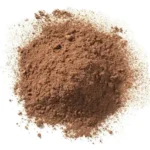

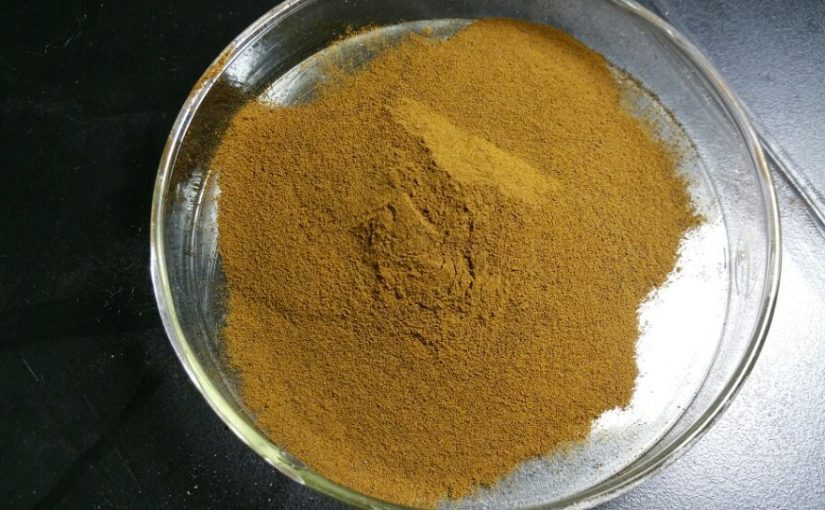
Sodium lignosulfonate is a water-soluble, anionic lignin derivative produced through sulfite pulping. In dye and pigment processing it can act as a dispersing and standardizing aid, but performance is grade- and formulation-dependent. Buyers should qualify it against the actual dye, water quality, milling equipment and downstream process rather than treating “sodium lignosulfonate” as a single interchangeable specification.
This guide focuses on dye, pigment and filler dispersion. It does not present one dosage, reducing-matter limit or performance claim as universal. The controlling values are those stated in the current TDS, SDS and batch COA for the exact supplied grade.
How sodium lignosulfonate supports dispersion
The lignin-derived aromatic structure can associate with particle surfaces, while sulfonate and other ionizable groups support water compatibility. Adsorption can increase particle-to-particle repulsion and can reduce the tendency of milled particles to reagglomerate. The practical result may be lower slurry viscosity, easier milling or improved redispersion, but the outcome depends on the substrate, pH, electrolyte level, water hardness, temperature and shear history.
Dispersion is therefore a system property, not a material claim in isolation. A grade that performs well with one disperse dye may behave differently with another dye, a mineral filler or a pigment surface treatment.
Primary application scope
Disperse and vat dye preparation
Sodium lignosulfonate may be evaluated during wet grinding, slurry preparation or standardization. Relevant endpoints include viscosity at controlled solids, particle-size distribution, filter or sieve residue, foam, shade, tint strength, thermal stability and redispersion after storage. It should not be assumed to preserve shade, strength or fastness without a side-by-side trial in the intended dye system.
Pigment and mineral-filler slurries
The material may also be screened for suspending and dispersing inorganic particles. Natural colour, odour and ionic content can limit use in colour-sensitive or low-odour formulations. For a broader comparison of lignosulfonate grades and formulation variables, see the lignosulfonate dispersant selection guide from the Green Agrochem surface-chemistry division.
Application boundaries
Coal-water slurry, concrete admixtures and other industrial systems use different qualification endpoints and should not be treated as extensions of a dye formulation. Those applications belong to the Green Agrochem industrial-chemicals division at LigninCorp. This page remains focused on dye and pigment dispersion so its search intent and technical advice stay coherent.
Grade variables buyers should compare
| Variable | Why it matters | How to verify |
|---|---|---|
| Molecular-size distribution | Can influence adsorption, viscosity response and grinding behaviour. | Use the supplier’s stated method and compare against a qualified reference lot. |
| Sulfonation and charge characteristics | Affect water compatibility and interaction with particle surfaces. | Review the TDS and confirm performance in the actual water and pH window. |
| Reducing matter | May matter in colour- or reduction-sensitive dye systems. | Specify the test method and batch acceptance limit; do not rely on an unqualified universal value. |
| Inorganic salts and sodium content | Can alter ionic strength, compatibility and final formulation balance. | Review the COA and run electrolyte-compatibility testing. |
| pH, moisture or liquid solids | Determine handling, active-solids calculations and formulation adjustment. | Confirm the supplied-form specification and calculate additions on the documented basis. |
| Insolubles and colour | Can affect filtration, deposits and shade-sensitive products. | Use agreed test methods and inspect representative production samples. |
Reducing matter and colour-sensitive systems
Reducing matter deserves specific attention when azo dyes or other reduction-sensitive components are present. A number without its method, basis and grade revision is not a dependable purchasing specification. Ask the supplier to identify the test method and confirm the acceptance limit on the relevant TDS or COA.
During qualification, compare shade, tint strength and colour change after the real milling, heating, pH adjustment and drying sequence. The finished formulation—not only the raw-material result—should determine acceptance. Claims concerning restricted substances or environmental attributes also require exact-grade documentation and should not be inferred from the product family name.
Recommended qualification procedure
- Define the baseline. Record the current dispersant, dye lot, water hardness, pH, solids, mill type, temperature and processing time.
- Normalize the basis. Compare candidates on documented active solids or another clearly defined supply basis.
- Set a screening range. Use the supplier-recommended starting range only when its basis, grade and document revision are clear; then optimize experimentally.
- Replicate the process. Use the same addition order, shear, milling energy, temperature profile and hold time expected in production.
- Measure relevant endpoints. Check viscosity, particle size, sieve or filter residue, foam, shade, tint strength, settling and redispersion.
- Age the samples. Recheck after the expected storage period and after relevant heat or freeze-thaw exposure where applicable.
- Confirm scale-up. Pilot the selected grade before approving a production change.
Common failure modes and troubleshooting
- Viscosity remains high: check pH, water hardness, solids basis, addition order and whether the grade adsorbs on the actual particle surface.
- Flocculation or hard sediment forms: investigate electrolyte load, incompatibility with other anionic or cationic additives, overdosing and incomplete milling.
- Foam interferes with processing: reproduce plant shear and evaluate defoamer compatibility rather than judging a static beaker test.
- Shade or tint shifts: examine the natural colour of the grade, reducing matter, heat history and interaction with the dye chemistry.
- Filter residue increases: review insolubles, particle-size distribution, water quality and storage-induced agglomeration.
Documents to request before approval
A commercial evaluation should include a current TDS with revision date and test methods, an SDS for the destination market, a representative COA, a sample from the proposed production grade and written confirmation of supplied form, packaging, storage conditions and shelf life. If regulatory or restricted-substance statements are needed, request grade-specific declarations rather than relying on general marketing language.
Information to include in an enquiry
For a useful recommendation, provide the dye or pigment class, formulation type, target solids, pH range, water hardness, milling equipment, process temperature, colour sensitivity, current dispersant and the performance problem being addressed. Send the information to info@greenagrochem.com. This allows the supplier to propose a relevant grade and a documented starting point for laboratory qualification.