
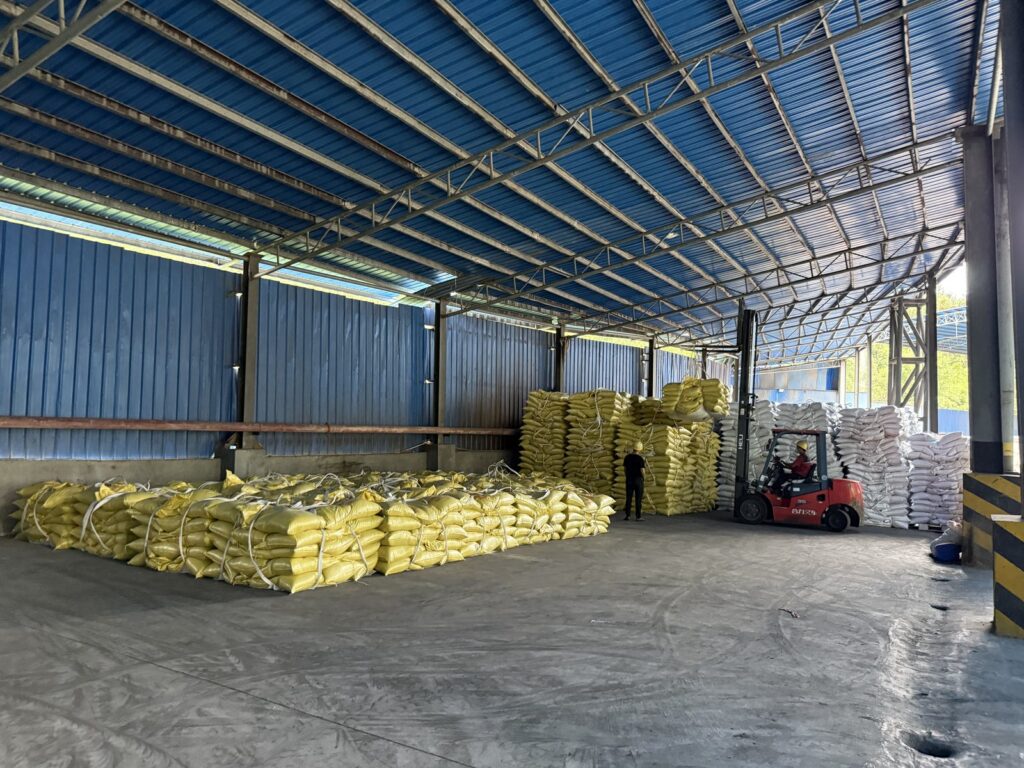
Iron Lignohumate for Irrigation and Foliar Feeding
Iron lignohumate (GAC-FeLHA-S) is a purified, iron-fortified lignohumate that dissolves completely in water and has a high cation exchange capacity. It supplies iron by irrigation and foliar spray while adding the soil-conditioning effects of humic substances.
Specification (TDS GAC-FeLHA-S)
| Parameter | Typical value |
|---|---|
| Appearance | Black shining granules and powder |
| Iron | 5.0% min |
| Lignohumate content | 75% min |
| Fulvic acids (dry basis) | 1.0% min |
| Water solubility | 100% |
| pH | 9 – 10 |
| Moisture | 15.0% max |
Benefits Listed in the TDS
- High CEC holds more nutrients and raises the efficiency of urea, ammonium sulfate, DAP and MAP
- Holds nitrogen for slower release and releases phosphorus locked by Al³⁺
- Improves soil structure and buffering; in sandy soil increases water and nutrient retention
- In acidic soil, binds aluminium and heavy metals while releasing bound phosphate
- Supports soil microbial activity and organic matter
Iron Lignohumate or Ferrous Lignohumate?
| Iron lignohumate (GAC-FeLHA-S) | Ferrous lignohumate (GAC-FeLSHA) | |
|---|---|---|
| Iron | 5.0% min | 1 – 3% ferrous |
| Organic base | 75% min lignohumate | 55% min lignohumate |
| pH | 9 – 10 | 4 – 7 |
| Appearance | Black granules / powder | Black powder |
More: ferrous lignohumate · iron lignosulfonate (Fe ≥ 14%).
Packing and Handling
25 kg woven bags with poly liner; shelf life 24 months; dissolve in a small tank and filter before drip irrigation.
Signs of Iron Deficiency
- Interveinal chlorosis on the youngest leaves: yellow leaf tissue with green veins
- In severe cases leaves turn almost white and growth stalls
- Typical on calcareous and high-pH soils, waterlogged or compacted soils, and with high bicarbonate irrigation water (“lime-induced chlorosis”)
- Sensitive crops include citrus, grapes, soybean, peach, pear and many ornamentals
Because the symptom appears on new growth, early foliar correction followed by soil or fertigation treatment is the usual approach.
How to Use It
- Dissolve first: pre-dissolve the product in a small volume of water under stirring, then add it to the spray tank or fertigation stock tank.
- Jar test: before mixing with other fertilizers or crop protection products, mix the products at their use ratio in a jar and check for precipitation or separation.
- Timing: apply foliar sprays in the early morning or late afternoon; avoid spraying in strong sun or before rain.
- Fertigation: filter the stock solution and flush the lines after injection.
- Trial first: confirm rate and crop safety on a small area before full-field use.
What to Check When Buying
- Element content on the COA (and whether it is stated on an as-is or dry basis)
- Water-insoluble matter, which matters for drip and spray nozzles
- Moisture and caking risk for powder grades; packing with liner for humid climates
- Heavy metals, if your market regulates them in fertilizers
- Registration or labelling requirements for micronutrient fertilizers in the destination country
Documents
Each shipment comes with a batch COA.
Frequently Asked Questions
What is iron lignohumate?
A purified, iron-fortified lignohumate that is completely water-soluble, used in irrigation and foliar spray to supply iron together with humic soil benefits.
How much iron is in iron lignohumate?
GAC-FeLHA-S contains 5.0% min iron, 75% min lignohumate and 1.0% min fulvic acids (dry basis).
Can it be used in drip irrigation?
Yes. The TDS advises dissolving it in a small tank and filtering before transferring to drip irrigation.
How does it differ from ferrous lignohumate?
Iron lignohumate (GAC-FeLHA-S) is black, alkaline (pH 9–10) with 5% min iron and 75% min lignohumate. Ferrous lignohumate (GAC-FeLSHA) is black, pH 4–7, with 1–3% ferrous iron.