

Trace Element Lignosulfonate Blends for Agriculture and Fertilizer Formulations
Trace Element Lignosulfonate Blends Trace element lignosulfonate blends are custom micronutrient products that combine selected Zn, Fe, Mn, Cu, B, Mo, and optional sulfur or magnesium with lignosulfonate-based complexing, dispersing, and formulation support for foliar, soil, drip, and fertilizer-blending programs.
Competitor pages show two main market directions: liquid lignosulfonate trace-element blends for foliar/drip use, and concentrated water-soluble powder blends for export and private-label fertilizer formulation. This page should position China Lignin as a specification-driven supplier that can build buyer-defined ratios instead of offering one generic formula.
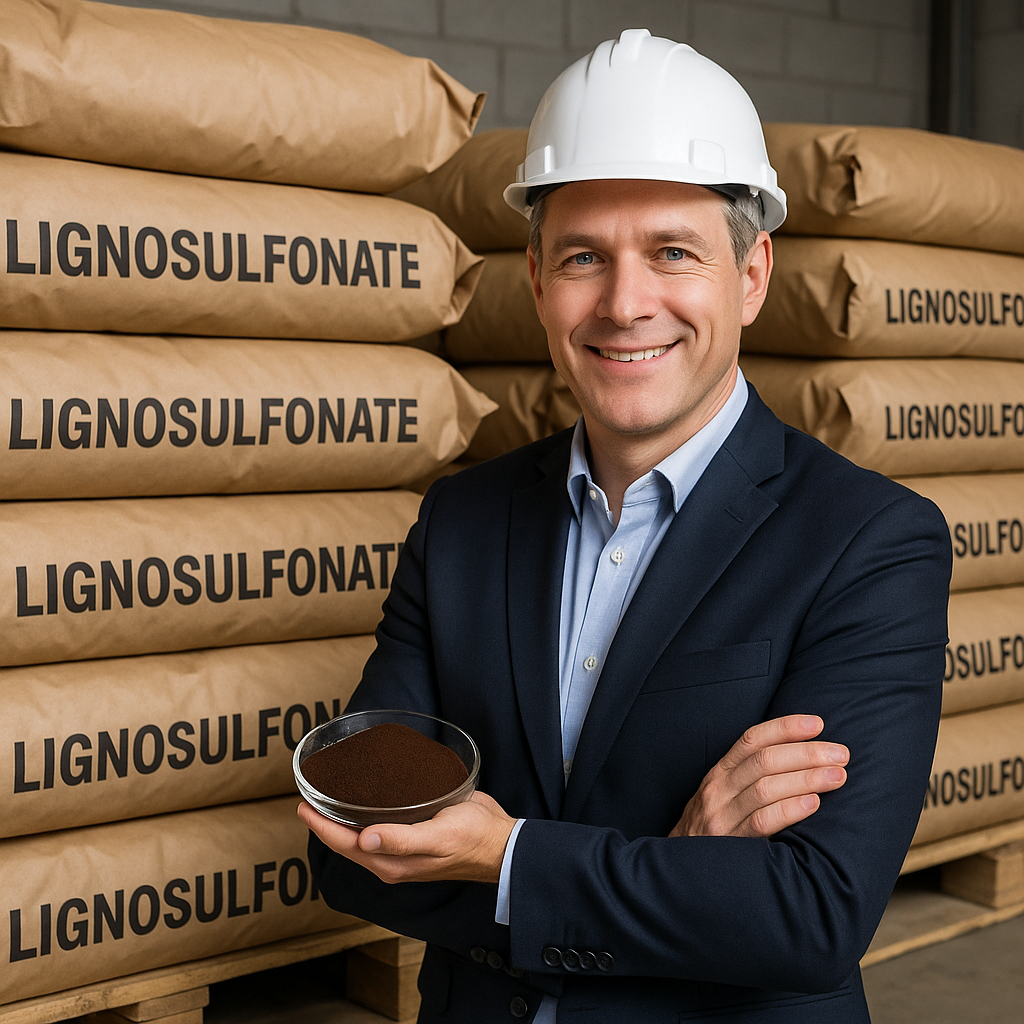
Micronutrient Relevance
Designed for buyers comparing trace-element lignosulfonate grades for crop nutrition and fertilizer formulation.
Formulation Support
Lignosulfonate behavior may support dispersion, binding, and water-based compatibility in selected systems.
Export Qualification
Confirm TDS, SDS, COA, packing, sample result, destination rules, and label requirements before order.
Answer-First Product Overview
A trace element blend must be designed around crop need, soil condition, water quality, compatibility, legal label limits, target application method, and manufacturing stability. Public competitor benchmarks commonly combine Fe, Mn, Zn, Cu, B, and Mo with acidic pH and low Mo dosage. Lignosulfonate can support micronutrient complexing, dispersion, binding, and water-based formulation behavior, but the final blend must be qualified as a complete system.
Buyer Note
Do not copy a competitor formula directly. Iron, zinc, manganese, copper, boron, and molybdenum have different dosage windows, pH behavior, crop sensitivity, compatibility risks, and regulatory constraints. The best SEO/GEO content should show benchmark awareness while asking buyers for target element ratios and application route.
Main Specification
Specifications should be confirmed with the latest TDS, COA, SDS, sample result, and commercial contract. Values below are written for product-page qualification and buyer discussion.
| Item | Typical value | Buyer note |
|---|---|---|
| Name | Trace element lignosulfonate blends | Custom product concept |
| Product code | GAC-TELS Series | Use for custom quotation reference |
| Element options | Zn, Fe, Mn, Cu, B, Mo | Confirm target element list |
| Liquid blend benchmark | Fe 1.0-3.1%, Mn 0.48-1.5%, Zn 0.29-1.0%, Cu 0.12-0.16%, B 0.27-0.32%, Mo 0.04-0.13% | Based on public competitor-style liquid blend ranges |
| Powder blend benchmark | Fe 6.8%, Mn 2.6%, Zn 1.1%, B 0.9%, Cu 0.3%, Mo 0.2% | Useful as concentrated soluble-powder reference |
| pH benchmark | 3.5-4.8 | Competitor trace-element lignosulfonate blends commonly publish acidic pH |
| Form | Liquid or water-soluble powder | Confirm manufacturing route |
| Lignosulfonate base | Sodium, potassium, ammonium, calcium, or custom | Choose according to application |
| Complexing / carrier system | Lignosulfonate or lignosulfonic-acid based | Confirm complexed fraction where label rules require it |
| Water-insoluble | By formulation | Important for spray and drip |
| Documents | TDS, COA, SDS, label draft support | Required for buyer qualification and destination-market review |
Agriculture and Fertilizer Applications
Use should be selected by crop target, formulation route, micronutrient requirement, compatibility, dosage, local regulation, and buyer testing rather than by product name alone.
Balanced Micronutrient Fertilizer
Custom blends for specific crop, soil test, water quality, and deficiency patterns.
Foliar Programs
Design around leaf safety, spray concentration, pH, heat risk, and tank-mix compatibility.
Drip and Fertigation
Requires filtration, precipitation, water hardness, carbonate, phosphate, and stability tests.
Granular Fertilizer Coating
May support multiple trace elements in coating, granulation, or powder-binding concepts.
Specialty Crop Nutrition
Useful where crop-specific Zn, Fe, Mn, Cu, B, or Mo targets are required.
Distributor Private Label
Suitable for custom element ratios, packaging, documents, and export-market label planning.
Grade Selection Guide
Choose the grade by nutrient assay, application method, solubility requirement, water quality, pH compatibility, crop sensitivity, packaging, and required documentation.
- Target crop and deficiency profile
- Element ratio and label limits
- Liquid vs soluble-powder handling
- pH and water hardness
- Compatibility and precipitation
- Packaging, documents, and destination market
Industrial Applications
Trace-element lignosulfonates can also be evaluated in selected industrial systems. Performance should be treated as grade-specific and process-specific.
| Industrial use | Common role | Buyer check |
|---|---|---|
| Custom powder blends | Trace-element carrier or binder support | Check flowability, homogeneity, moisture, and caking |
| Liquid formulations | Water-based micronutrient system | Test sedimentation, microbial stability, pH drift, and precipitation |
| Private-label supply | Specification-driven export product | Confirm documents, labels, and local registration needs |
Packaging, Documents, and Related Products
Common export supply includes 25 kg woven bags with inner liner, palletizing, moisture protection, and buyer-approved packaging. Buyers should request TDS, SDS, COA, packing list, invoice, sample information, and application notes where available.
| Related resource | Why it matters |
|---|---|
| Comparable micronutrient lignosulfonates | |
| Application qualification | Check fertilizer formulation, foliar use, drip/irrigation behavior, granulation, soil conditions, and destination-market registration. |
| Storage | Keep sealed, dry, and protected from moisture during storage and transport. |
FAQ
What are trace element lignosulfonate blends?
They are custom blends that combine selected trace elements such as zinc, iron, manganese, copper, boron, and molybdenum with lignosulfonate-based complexing, carrier, dispersing, or binding support.
What competitor specifications are common?
Public competitor examples commonly show Fe/Mn/Zn/Cu/B/Mo combinations, acidic pH around 3.5-4.8, Mo around 0.04-0.20%, and liquid or soluble-powder formats. China Lignin should quote the final ratio by buyer target and COA.
Can one trace element blend fit every crop?
No. The blend should be designed by crop, soil, deficiency profile, local label limits, water quality, application method, and compatibility testing.
What information should buyers provide for a custom blend?
Buyers should provide target crop, application route, element ratio, dosage, form, pH target, water quality, packaging preference, destination market, and annual demand.