
China Lignin · Micronutrient Lignohumate Platform
Zinc Lignohumate
Water-Soluble Zinc–Lignohumate for Agricultural and Technical Formulations
Zinc Lignohumate is a water-soluble micronutrient material combining zinc with a lignohumate organic matrix. It is developed for agricultural fertilizer systems and qualified high-temperature, salt-tolerant drilling-fluid evaluations.

Micronutrient–Lignohumate Technology
The grade integrates a defined zinc contribution with lignohumate functionality in a water-soluble powder. Selection should reflect crop demand, soil chemistry, water quality, process conditions and applicable regulations.
Zinc Contribution
Approximately 1% total zinc in the standard grade.
Water-Soluble Form
Designed for aqueous dispersion and compatible fertilizer development.
Dual Technical Scope
Agricultural micronutrient and qualified drilling-fluid development.
Product Characteristics
- High dry matter for transport and formulation.
- Minimum 55% lignohumate content.
- Maximum 5% moisture.
- Standardized micronutrient grade with batch COA support.
- Completely water-soluble powder as described in the current TDS.
Technical Properties
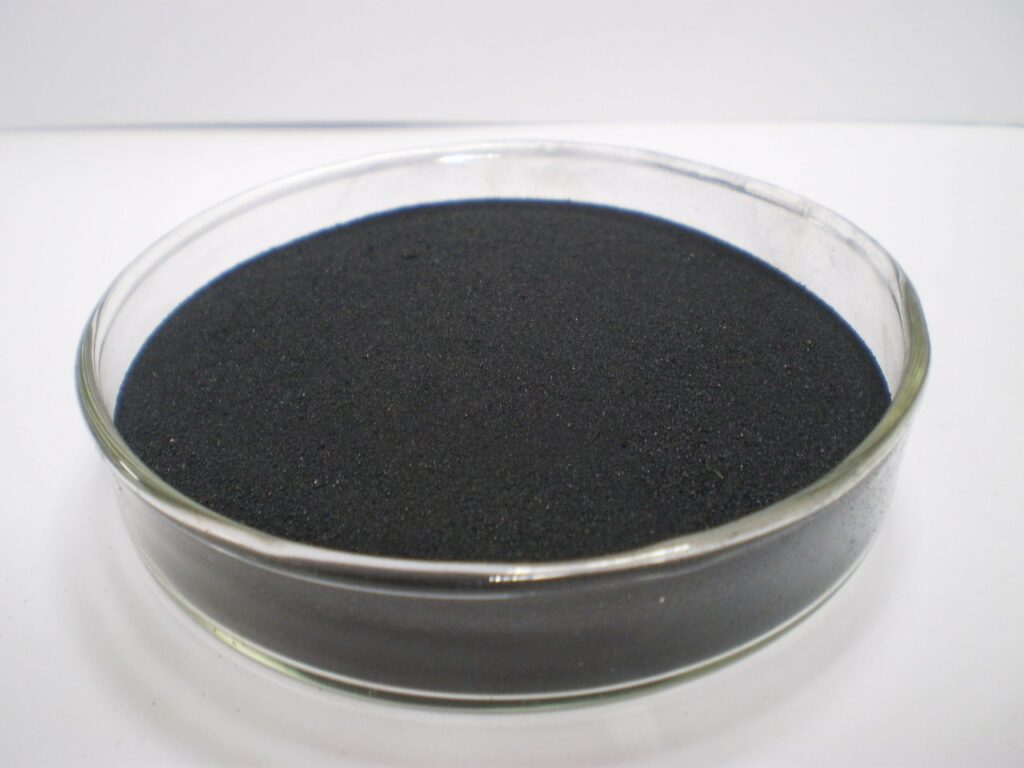
Product standard: GAC-ZnLSHA · Form: Black powder
| Parameter | Typical Specification |
|---|---|
| Appearance | Black powder |
| Dry matter | ≥ 95% |
| Sulphate | ≤ 2% |
| Total zinc | Approx. 1% |
| Lignohumate | ≥ 55% |
| Moisture | ≤ 5% |
Typical production values are provided for technical evaluation. The approved specification, contract and shipment Certificate of Analysis govern final acceptance and batch results.
Applications
Agricultural Fertilizers
For foliar, irrigation and compatible micronutrient formulation trials.
Organic-Mineral Blends
Zinc-containing organic component for powder and compound fertilizers.
Soil Nutrition Programs
For zinc-relevant programs based on soil and crop analysis.
Drilling Fluids
For qualified high-temperature and salt-tolerant thinning trials.
Application Development
| Application Route | Development Requirement |
|---|---|
| Foliar development | Verify crop safety, concentration, water quality and tank-mix compatibility. |
| Irrigation systems | Confirm filtration, precipitation risk and full-system compatibility. |
| Dry fertilizer blends | Verify assay uniformity, segregation and caking. |
| Drilling-fluid trials | Validate temperature, salinity, rheology and system compatibility. |
No universal field rate is stated. Final concentration and application rate require crop, soil, water-quality, compatibility, regulatory and field validation.
Why Zinc Matters in Crop Nutrition
Zinc deficiency is the most widespread micronutrient deficiency in crops worldwide. It is most common on high-pH and calcareous soils, sandy or low-organic-matter soils, and soils with high phosphorus levels. Maize, rice, citrus and beans are among the most responsive crops. Typical symptoms include short internodes, small leaves and interveinal chlorosis.
In a lignohumate product, zinc is held by the organic matrix of lignin-derived humic substances. This helps keep zinc soluble in spray tanks and irrigation water, compared with simple zinc salts that can precipitate in hard or alkaline water. Field benefit still depends on soil and crop, so it should be confirmed by soil or leaf analysis and trials.
Reference: Alloway B.J. (2008). Zinc in Soils and Crop Nutrition, 2nd ed. International Zinc Association and International Fertilizer Industry Association, Brussels and Paris.
Drilling-Fluid Performance (TDS)
The GAC-ZnLSHA TDS lists zinc lignohumate as a drilling-mud thinner that holds its performance at 150–160 °C for 16 hours and tolerates salt up to 2%. Confirm these values in your own base mud. Related products: chrome-free lignosulfonate and lignosulfonate in oil drilling.
Technical Considerations
- Zinc availability is affected by soil pH, carbonate and phosphorus interactions.
- Total zinc must be included in the complete nutrient and regulatory balance.
- Water solubility does not eliminate the need for tank-mix testing.
- Drilling performance claims require system-specific laboratory validation.
Quality Control
Release controls include identity, appearance, dry matter, moisture, total total zinc, lignohumate, sulphate and water-insoluble matter where specified. Batch identification and retained QC records support supply consistency.
Technical Documentation
Product Documents
TDS, specification, SDS and packaging specification.
Batch Documents
Certificate of Analysis, batch identification and traceability.
Project Support
Samples, compatibility review, pilot trials and export documents.
Packaging and Storage
Packaging
- 25 kg woven bag with polyethylene inner liner.
- Custom export packaging available by agreement.
Storage
- Store sealed in a cool, dry and ventilated area.
- Protect from moisture, sunlight and incompatible materials.
- Reseal opened bags promptly.
- Shelf life: 24 months in unopened original packaging under recommended conditions.
Safety and Regulatory Use
Avoid excessive agricultural application and confirm local zinc limits. Consult the current SDS and applicable fertilizer, feed or industrial regulations before use.
Lignohumate Product Platform
Frequently Asked Questions
What is zinc lignohumate?
A completely water-soluble black powder that combines about 1% total zinc with a minimum 55% lignohumate (GAC-ZnLSHA).
How is zinc lignohumate applied?
By foliar spray and irrigation fertilizer, and as a zinc-containing organic component in compound fertilizers. It also improves the efficiency of co-applied urea, ammonium sulfate, DAP and MAP.
Can zinc lignohumate be used in drilling mud?
Yes. The TDS lists it as a drilling-mud additive that resists 150–160 °C for 16 hours, tolerates 2% salt and gives strong thinning compared with ferrochrome lignosulfonate (FCLS).
How is it different from zinc lignosulfonate?
Zinc lignohumate carries about 1% zinc in a lignohumate matrix. Zinc lignosulfonate powder (GAC-ZnLS) carries 10% min zinc and is chosen when a higher zinc dose is needed.
How is it packed?
25 kg woven bags with PE liner; shelf life 24 months in unopened packaging.
What documents are available?
TDS, SDS/MSDS, COA, specification and packaging information are available on request; each shipment comes with a batch COA.
Develop with China Lignin
Share the crop, formulation, application route, soil or water conditions and target parameters. Our technical team can review grade selection, compatibility, trials, documentation and packaging.