
Manganese lignohumate GAC-MnLSHA should be selected through grade-specific analysis and formulation testing. This guide explains the supplier-reported properties, particularly total manganese and the unspecified density basis. For supply options and samples, see the manganese lignohumate product page.
Source document and grade
The reference is Green Agrochem Manganese Lignohumate Technical Data Sheet, document GAC-MnLSHA, Rev. 1.0. The corresponding PDF and Word property tables agree. Match this code across the sample, quotation, approved specification and shipment COA; do not substitute data from another micronutrient lignohumate.
Supplier-reported data and interpretation
| Parameter | TDS value | Interpretation and verification |
|---|---|---|
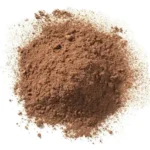
| Appearance | Black powder | Confirm identity and physical condition on receipt. |
| Dry matter | 95% min | Use an actual batch result and agreed method for calculations. |
| Water-insoluble matter | 1.0% max | Confirm the filtration or gravimetric method. |
| Sulphate | 2% min | Source minimum notation retained; verify the reporting basis. |
| Total manganese | Around 3% | Approximate total-content reference, not a minimum, soluble-Mn assay or plant-availability result. |
| Lignohumate | 55% min | Confirm analyte definition and test method. |
| Density | 0.532 g/cm³ | The TDS does not state density type or method. Do not assume this is solution density or use it for volumetric dosing without clarification. |
| Moisture | 7% max | Interpret together with dry matter using consistent methods and an actual batch COA. |
Evidence status: the TDS describes these as typical production results for reference, not binding specifications. Minimum and maximum notation has been retained as written, but commercial acceptance requires an agreed current specification and actual batch results. The dry-matter minimum and moisture maximum are separate limits, not a measured pair; do not add the two limits as if both were the composition of a single batch.
Distinguish total manganese from delivered and available manganese
Before calculating manganese input, establish whether the reported analysis is on an as-supplied or dry-matter basis. Use the batch result rather than treating “around 3%” as an exact assay. If a dry-basis value is used, apply the verified dry-matter fraction consistently. State the amount of product and manganese delivered per formulation batch or treated area separately.
Total manganese content does not establish its water-soluble fraction, chemical form, chelation status or crop availability. Request the relevant analytical evidence and evaluate the intended complete formulation. Do not infer that this grade is more effective than a mineral manganese source without a defined comparison.
Test the intended formulation
Use the actual water source, salts, pH range, mixing order and equipment. Record dissolution, precipitation, sediment, filtration, viscosity and stability over the intended holding or storage period. A satisfactory freshly mixed sample does not establish long-term stability or compatibility at every dilution.
For soil or foliar concepts, first define the crop need and intended endpoint. Use appropriate agronomic diagnosis and a controlled trial, including a relevant manganese comparison when evaluating nutrient performance. Record the treatment basis, application volume, timing, crop response and adverse effects. Claims about increased yield, soil pH correction or fertilizer efficiency require evidence for the tested conditions.
Request an exact-grade trial recommendation
Ask the supplier for a written starting trial recommendation stating product form, application, denominator and as-supplied or dry basis. Validate it with the intended formulation, water and equipment before scale-up. The TDS does not provide a defined numerical application rate, and the composition table is not a dosage recommendation.
For related evaluation methods, use the agricultural metal-ion formulation guide and the plant-response trial guide. These explain testing questions, not product equivalence between calcium lignosulfonate and manganese lignohumate.
Packaging and storage
GAC-MnLSHA TDS Rev. 1.0 lists 25 kg lined woven bags, with custom packaging by agreement. Its stated shelf life is 24 months from production in original unopened packaging, stored in a cool, dry, well-ventilated area. Avoid prolonged moisture exposure and reseal opened bags. Confirm shipment terms and review the current SDS for handling requirements.
Technical document and sample request
Contact info@greenagrochem.com with GAC-MnLSHA, the proposed formulation, target manganese analysis, water quality, application method, destination market and required acceptance tests. Request current TDS/SDS, an actual batch COA, clarification of density and assay bases, and a representative sample.