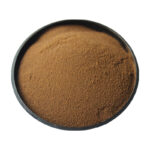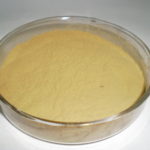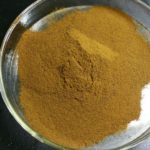


Buying sodium lignosulfonate for delivery in Europe starts with the intended use, commercial grade and destination country. A chemical name alone does not establish product suitability, regulatory status or a reliable landed cost. Use this guide to assemble a comparable quotation and qualification package before ordering.
Define the application before comparing suppliers
For fertilizer and agricultural formulation work, start with the China Lignin agricultural sodium lignosulfonate product page. For concrete, ceramics, industrial binding or other industrial procurement, use the LigninCorp industrial sodium lignosulfonate product page. Grades selected for one application should not be treated as interchangeable with feed, food or other regulated-use materials.
| Application | Qualification questions |
|---|---|
| Fertilizer formulation | Does the grade dissolve and remain compatible with the actual nutrient salts, water and formulation pH? Check sediment and storage stability. |
| Concrete or mortar | Evaluate workability, setting, air content and strength with the actual cementitious materials. Do not assume an ordinary lignosulfonate is a high-range superplasticizer. |
| Ceramic processing | Compare slurry viscosity, solids loading, casting or forming behaviour and downstream defects in the actual body. |
| Industrial binding | Check the required bond or granule strength, moisture sensitivity and processing conditions against an untreated control. |
Request a grade-specific document package
The European Commission describes REACH as a framework for chemical information, risk management and company responsibilities. Its official REACH overview is general regulatory guidance, not proof that a particular Green Agrochem grade or shipment is covered.
Ask the supplier and your importer or regulatory adviser to confirm the documentation applicable to the exact product, supply chain and destination. This page does not certify registration, exemption, hazard classification or authorization for a specific use.
- Product identity: commercial grade, product code, supplier identity and a current technical data sheet.
- Safety documentation: the current grade-specific SDS and the language and format needed at the destination. Review handling, storage, exposure controls and transport information rather than relying on a generic “non-hazardous” label.
- REACH status: written confirmation of the applicable status and its basis, with substance identity and supply-chain coverage checked by the responsible party.
- Use-specific evidence: request separate supporting documentation for fertilizer, crop-protection, feed or food uses where relevant. An industrial TDS is not evidence of approval for another use.
- Quality traceability: agreed specification limits, test methods and a lot-linked COA for the delivered material. A representative COA is not the result for every shipment.
Compare technical data on the same basis
Ask whether each value is a specification limit, typical property or batch result. For liquid products, distinguish total dry matter from active-content claims; for powders, identify the moisture basis. A pH result needs its test concentration and method. Insolubles, salts, colour and other application-sensitive properties should be compared using compatible methods.
Use a numerical starting dosage only when the supplier provides it for the selected grade and application, with an explicit calculation basis. Validate the trial range in the actual formulation. Neither a dosage recommendation nor a laboratory result guarantees production performance.
Build a comparable European delivery quotation
Specify the destination country and delivery point, quantity, powder or liquid form, packaging, requested delivery window, currency and Incoterm. Ask the quotation to state its validity and what is included or excluded. Confirm stock location and dispatch arrangements in writing; this guide makes no claim of European manufacturing or local inventory.
Compare the delivered cost of an accepted grade, not just a headline price per tonne. Include the quoted transport and handling scope, packaging, any testing costs and the formulation quantity needed to meet your acceptance criteria. Use current shipment-specific figures rather than a market forecast as a purchasing budget.
Send an enquiry with enough detail for technical review
Email info@greenagrochem.com with your application, destination, required quantity, preferred form and packaging, target properties and required documents. Request a current grade-specific TDS and SDS, then agree the sample test plan and acceptance criteria before a production order.