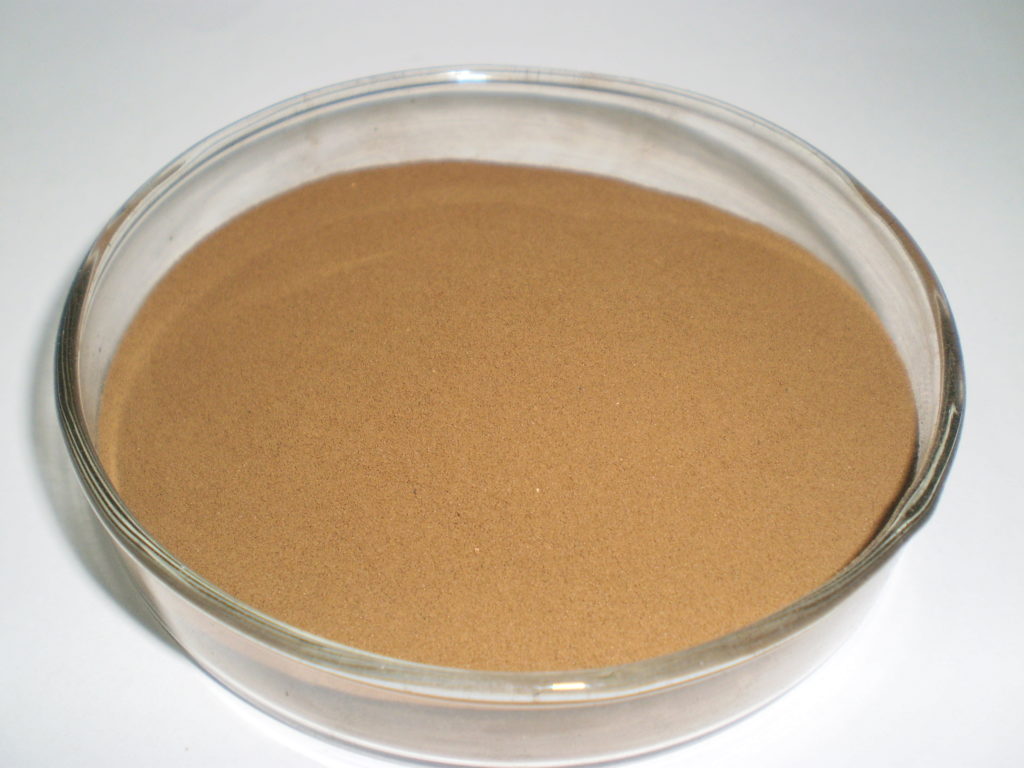
Buying calcium lignosulfonate powder for an agricultural formulation starts with identifying the function and commercial grade, not selecting the lowest price attached to the chemical name. A fertilizer binder, suspension aid and industrial road binder may have different documentation and acceptance requirements.
This guide covers agricultural purchasing and sample approval. For concrete, ceramics or road applications, contact LigninCorp’s industrial calcium lignosulfonate team. Do not qualify a feed application using an agricultural or construction document set.
Define the purchase before requesting quotations
| RFQ item | Information to provide | Why it matters |
|---|---|---|
| Required function | Granulation binding, suspension support or another defined role | Sets the application tests needed for approval |
| Formulation and process | Fertilizer salts, fillers, process water, mixing and drying conditions | Allows relevant grade selection rather than a generic recommendation |
| Commercial scope | Trial and order quantities, delivery destination, packaging and required date | Makes quotations comparable |
| Acceptance requirements | Analytical limits, methods, processing targets and document requirements | Defines what the delivered material must satisfy |
Use the fertilizer formulation selection guide to define technical objectives before issuing the RFQ. Do not treat the presence of calcium as proof that the powder is a suitable standalone calcium fertilizer.
Ask for an identified document set
- TDS: commercial code, revision, physical form, analytical definitions and application scope.
- SDS: identity and handling information for the material actually offered.
- Sample COA: an actual report identifying the sample lot, measured results and methods; a blank template is not a test result.
- Shipment COA: results tied to the delivered batch and agreed acceptance criteria.
- Application guidance: any starting trial range must name the grade and define the mass or volume basis.
Compare lignosulfonate content, dry matter and moisture as separate reporting items. “Purity” without an analytical definition is not a useful purchase criterion. The agricultural-grade properties guide shows selected TDS entries and the questions that must accompany them.
Approve the sample against the intended use
For granulation, evaluate strength, abrasion, drying and dissolution with the actual fertilizer mix. For suspensions, evaluate settling, redispersibility, viscosity and filtration. Agree the test method and acceptable result before comparing suppliers. A readily soluble powder does not by itself establish compatibility with a concentrated fertilizer solution.
Retain the sample identity and trial record. For repeat purchases, agree how material or manufacturing changes will be communicated and when requalification is required. Do not substitute a different grade solely because its colour or chemical name looks similar.
Compare quotations on the same basis
Request a dated quotation identifying the grade, quantity, currency, packaging, named delivery place, agreed trade term and validity period. Confirm freight, insurance and other charges explicitly. Sample availability, sample charges, production timing and transit estimates must be confirmed for the actual enquiry; this page does not promise free samples or a fixed delivery period.
Assess delivered cost together with validated addition rate and processing performance. A low price per kilogram can be misleading if two quotations refer to different composition, documentation or packaging. Do not calculate a dry-solids comparison until the analytical basis and any inconsistent TDS entries have been resolved.
Check packaging and incoming quality
Specify the agreed bag or bulk-container format, liner, pallet arrangement, labelling and lot traceability in the order. On receipt, check identification, packaging condition and the shipment COA before releasing the lot. Follow the selected grade’s storage and handling documents rather than a generic internet shelf-life statement.
Organic-input eligibility, impurity limits and crop-use claims need application- and market-specific evidence. Supplier documentation should support the intended use; neither a generic SDS nor a COA establishes blanket approval. See the organic-farm application review when that scope is relevant.
Request a grade-specific offer
Start with the agricultural calcium lignosulfonate product enquiry or send your RFQ details to info@greenagrochem.com. Ask for a matching sample and document set before confirming a bulk purchase.