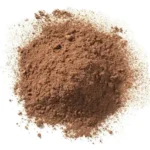

Liquid lignosulfonate is used in agriculture primarily as a formulation and processing aid. It may be evaluated in fertilizer granulation, liquid nutrient systems, suspensions, seed treatments and selected soil-applied formulations. The commercial liquid is not a single standardized material: counter-ion, solids content, density, pH, ash, reducing sugars, insolubles and preservation system can differ by grade and supplier.
The correct question is therefore not simply “How much liquid lignosulfonate should be applied?” It is “Which exact grade, on what calculation basis, is compatible with the intended formulation and produces the required result under controlled testing?” This guide explains the information needed to answer that question without treating a formulation aid as a guaranteed agronomic active ingredient.
What buyers should verify before formulation work
| Property | Why it matters | Required evidence |
|---|---|---|
| Counter-ion | Sodium, calcium, magnesium, ammonium or potassium can affect compatibility and final nutrient or salt loading. | Exact product identity and current TDS. |
| Solids content | Controls total dry matter delivered by a liquid addition; lignosulfonate content requires its own analytical basis. | Specification, test method and batch COA. |
| Density | Needed when converting between mass and volume dosing. | Temperature-qualified value and test basis. |
| pH and ionic profile | Can influence mineral compatibility, viscosity and storage stability. | Current specification and formulation testing. |
| Insolubles and filtration | Relevant to pumps, screens, spray equipment and sediment control. | Grade specification and equipment trial. |
| Microbial preservation | Aqueous products may require suitable storage and contamination control. | SDS, supplier handling guidance and plant hygiene review. |
Agricultural formulation pathways
Fertilizer granulation and binder systems
A liquid grade can provide both lignosulfonate solids and process water, which may simplify addition in some granulation systems. Evaluation should separate the binder effect from the water balance. Raw-material particle size, moisture, recycle ratio, granulator design, drying temperature and residence time can all change green-granule formation, dried strength, attrition, caking and redissolution. Compare candidates on a consistent, verified basis. Equal liquid volumes may deliver different amounts of total dry matter and lignosulfonate.
Liquid fertilizer and micronutrient formulations
Lignosulfonates may assist dispersion or metal-ion complexation in selected formulations, but compatibility cannot be assumed. Screen the exact metal salts, concentration, pH, water hardness and other formulation components. Observe precipitation, haze, sediment, viscosity drift and redispersibility during storage. A “complexed” material should not be labelled “chelated” unless the formulation and analytical evidence meet the applicable market definition.
Suspensions and flowable products
In mineral suspensions, liquid lignosulfonate may be screened as part of the wetting and dispersion package. Performance depends on particle surface, milling sequence, electrolyte content and the rest of the surfactant system. Measure viscosity at defined shear, settling rate, sediment hardness, redispersibility, particle-size stability and temperature-cycle behaviour. Pesticide-formulation surfactants and specialized auxiliaries should be qualified with the surface and interface technology division.
Seed treatment and coating
Liquid lignosulfonate may be evaluated as a binder or process aid in seed coating and pelleting. Useful process endpoints include coating adhesion, dust-off, flowability, drying and equipment cleanliness. Seed safety, germination and emergence must be tested with the actual seed variety, active ingredients and treatment rate; these outcomes should never be promised from the ingredient name alone. See the seed-coating binder guide.
Soil-applied formulation concepts
Any soil-applied concept should begin with soil and irrigation-water diagnosis. Texture, salinity, sodicity, drainage, crop sensitivity and cumulative counter-ion loading are more relevant than broad claims such as “improves all soils” or “reduces irrigation.” Use untreated and appropriate benchmark controls, define measurable endpoints and monitor possible adverse effects. The soil-conditioning evaluation guide provides a more detailed trial framework.
Converting liquid addition to dry-solids basis
Liquid products should be compared on a defined basis. Total dry matter delivered equals the mass of liquid product multiplied by its verified total-solids mass fraction. Total dry matter can include lignosulfonate, sugars, inorganic salts and other components, so this calculation does not establish pure lignosulfonate content. When the verified lignosulfonate assay is expressed on a dry-matter basis, multiply delivered dry matter by that assay fraction to calculate lignosulfonate mass. If the assay is expressed on an as-supplied basis, apply it directly to liquid product mass. Confirm the assay basis and method before calculation. For volume metering, first convert volume to mass using density at the stated temperature.
A numerical addition level may be stated only when the current technical document for the exact grade provides it. Present it as a supplier-recommended starting trial range and identify whether the basis is as-supplied product, dry solids, total formulation, fertilizer solids, coating solids or another defined component. Laboratory and plant validation remain necessary for the actual raw materials, temperature, water quality, addition sequence and equipment.
Compatibility and stability programme
- Define the required function and measurable acceptance criteria.
- Verify the grade identity, solids, density, pH, impurities and preservation guidance.
- Prepare a control and candidate formulations using an equivalent dry-solids basis.
- Check order of addition, mixing energy, water quality and process temperature.
- Evaluate fresh properties and accelerated storage under conditions relevant to the destination market.
- Run a pilot or plant trial before locking the commercial formulation.
- Record the approved grade, specification, calculation basis and supplier change-control requirements.
Storage, pumping and plant handling
Confirm the supplier’s recommended storage-temperature window and shelf-life statement for the exact product. Tank and line materials, pump selection, filtration, recirculation, freeze or heat exposure and microbial control should be reviewed before bulk delivery. Do not dilute a stored product without assessing preservation and stability. Inspect aged material for separation, odour change, viscosity drift, sediment and contamination before use.
Documents and RFQ information
- Current TDS and SDS identifying the exact grade and revision.
- Representative COA with specification limits, units and test methods.
- Counter-ion and relevant elemental analysis.
- Solids, density and the temperature or method basis used for conversion.
- Packaging, storage, shelf life, origin and change-notification policy.
- Intended formulation, process conditions, destination market and acceptance tests.
For commercial liquid identity and document requirements, review the liquid lignosulfonate product qualification page. For broader grade selection, use the lignosulfonates in agriculture evidence guide, the fertilizer formulation guide and the sodium-loading guide. Neutral chemistry and technical-document guidance is available from Lignosulfonate.com.
Request an exact-grade evaluation
Send the intended function, formulation composition, water quality, target pH, processing method, preferred delivery form, storage conditions and destination market to info@greenagrochem.com. The technical team can then identify suitable candidate documents and samples for controlled evaluation without presenting a generic application rate as a production guarantee.