

Magnesium lignosulfonate may be evaluated in soil-applied products, but it should not be presented as a universal soil conditioner or automatic magnesium fertilizer. Its practical effect depends on the exact grade, application basis, soil texture and chemistry, water quality, climate, crop system, and formulation. A responsible development program starts with product characterization and soil diagnosis, then compares treatments in controlled laboratory, greenhouse, and field trials.
What the material is—and what the name does not prove
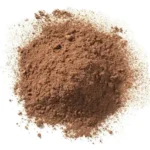
Magnesium lignosulfonate is a lignin-derived, water-soluble material containing sulfonate functionality and magnesium as a counter-ion. Commercial grades can differ in molecular distribution, organic-solids content, magnesium and inorganic-salt profile, reducing substances, pH, insoluble matter, physical form, and manufacturing history. The generic name does not establish a fixed composition, application rate, nutrient claim, organic-input status, environmental profile, or agronomic response.
Before evaluating soil use, obtain the current TDS, SDS, and lot-specific COA for the exact grade. Confirm that the sample, quotation, specification, and future commercial supply use the same product code and test basis.
Possible functions in a soil-applied formulation
Depending on formulation and conditions, a magnesium lignosulfonate grade may be screened for several distinct functions. These should be treated as test hypotheses rather than guaranteed benefits.
- Carrier or formulation aid: assists handling or distribution of compatible mineral and organic components.
- Binding or aggregation aid: may influence the cohesion of fine particles in granules or selected soil-surface treatments.
- Dispersing or complexing component: may interact with minerals or metal ions, with results governed by pH, salts, water hardness, and concentration.
- Magnesium-containing ingredient: contributes measurable magnesium only according to the exact grade analysis; plant availability and fertilizer status require separate evidence.
Start with soil and water diagnosis
A trial should begin with the problem to be solved, not with the ingredient. Record soil texture, pH, electrical conductivity, organic matter, cation-exchange characteristics where relevant, exchangeable calcium, magnesium, potassium and sodium, nutrient status, salinity or sodicity indicators, irrigation-water quality, drainage, compaction, and crop history. A material that behaves acceptably in one soil can perform differently in another.
Where magnesium nutrition is the objective, use soil and plant-tissue diagnostics and compare the lignosulfonate-containing treatment with an appropriate nutrient control. Do not assume that total magnesium in a product equals immediately plant-available magnesium or that magnesium addition is desirable in soil already high in magnesium.
Grade qualification for soil applications
| Parameter | Why it matters | Verification approach |
|---|---|---|
| Physical form and solids/moisture | Changes application basis, storage, dissolution, pumping, and freight | Use the current grade TDS and confirm by the agreed method |
| pH and conductivity | Influence compatibility and the salt load delivered with the treatment | Define sample concentration, water, temperature, and test method |
| Magnesium and counter-ion profile | Required for formulation balance and any nutrient assessment | Clarify total versus soluble value and whether it is typical or guaranteed |
| Sulfate, chloride, ash, and other agreed ions | May matter in saline soils, sensitive crops, or concentrated formulations | Review lot data against buyer-defined limits |
| Insoluble matter | Relevant to filtration, fertigation equipment, and product uniformity | Specify the filtration or gravimetric method |
| Contaminants and microbiology | Requirements vary by crop, use pattern, and jurisdiction | Test only against applicable regulatory and quality criteria |
Compatibility testing before a soil trial
If magnesium lignosulfonate will be blended with fertilizers, micronutrients, humic substances, biological products, pesticides, or irrigation water, screen the complete mixture before field use. Use the actual water source and expected concentrations. Record mixing sequence, pH, temperature, viscosity, precipitation, sediment, foaming, filtration behavior, color change, and stability over the intended holding period.
For fertigation or spray equipment, confirm passage through the intended filters, pumps, valves, emitters, and nozzles. A clear solution immediately after mixing does not prove storage stability or compatibility after dilution in hard water.
How to design a meaningful soil-conditioning trial
- Define the endpoint: for example aggregate stability, infiltration, runoff, surface crusting, dust, nutrient availability, crop establishment, or another measurable property.
- Use controls: include an untreated control and, when appropriate, a relevant commercial or nutrient control.
- Randomize and replicate: use enough independent plots or units to distinguish treatment effects from field variability.
- Keep the basis clear: record whether the rate is based on as-supplied product, dry solids, treated soil mass, surface area, water volume, or another defined basis.
- Measure over time: include baseline, early, and later observations appropriate to rainfall, irrigation, cultivation, and crop stage.
- Record adverse effects: monitor salinity, infiltration changes, crusting, germination, emergence, phytotoxicity, equipment deposits, and formulation instability.
Recommended starting trial range: evidence requirements
A numerical rate may be stated only when it is supported by a current technical document for the exact grade and identifies the application method and calculation basis. It should be described as a supplier-recommended starting trial range, not a universal field rate. Final treatment must be selected from replicated trials under the actual soil, water, crop, climate, equipment, and use pattern.
If the grade, document revision, rate basis, formulation, or trial conditions cannot be verified, omit the number. Published rates for unrelated lignosulfonates, competitor grades, dust-control treatments, or laboratory systems should not be transferred directly to agricultural soil use.
Claims that need direct evidence
- Improved soil aggregation, porosity, water retention, infiltration, or erosion resistance
- Reduced irrigation frequency, fertilizer use, nutrient leaching, or production cost
- Correction of magnesium deficiency or improved nutrient uptake
- Improved germination, root growth, crop yield, quality, or stress tolerance
- Stimulation of beneficial soil microorganisms or increased soil carbon
- Biodegradability, non-toxicity, organic-input eligibility, carbon benefit, or environmental superiority
These outcomes may be evaluated, but they are not inherent guarantees of the ingredient name. Quantitative claims should identify the exact grade, treatment, control, soil, crop, duration, conditions, method, and source.
Regulatory and labeling review
Eligibility for use in a fertilizer, soil amendment, plant biostimulant, organic-input product, or other agricultural category depends on the jurisdiction, composition, impurity limits, manufacturing process, claims, and labeling. A CAS number, lignin origin, or supplier statement does not by itself establish registration or certification. Review the finished product with a qualified local regulatory adviser before sale or field recommendation.
Practical qualification workflow
- Define the soil problem, crop system, endpoint, and regulatory category.
- Qualify the exact product grade using current TDS, SDS, COA, methods, and change control.
- Screen compatibility with irrigation water and all formulation components.
- Run controlled laboratory or greenhouse work with appropriate controls.
- Conduct replicated field trials and assess both intended and adverse effects.
- Confirm packaging, storage, application equipment, lot consistency, and commercial supply.
- Limit labels and recommendations to claims supported by the resulting evidence.
Related agricultural and technical resources
Review the agriculture-focused magnesium lignosulfonate product page, the broader magnesium lignosulfonate uses in agriculture guide, and the agricultural supplier qualification guide. For neutral chemistry and grade-comparison information, see magnesium lignosulfonate properties and test methods.
For a grade-specific TDS, recent COA, representative sample, or proposed soil-trial review, contact info@greenagrochem.com with the soil analysis, crop, water quality, intended function, formulation, application method, destination market, and acceptance criteria.