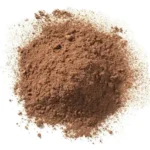

Magnesium lignosulfonate is used in agriculture primarily as a formulation and processing aid. Depending on the exact grade, it may be evaluated in fertilizer granulation, mineral and micronutrient formulations, liquid systems, seed-treatment formulations, and selected soil-applied products. Its suitability cannot be inferred from the chemical name alone: the supplied grade, composition, impurities, test method, application rate basis, and destination-market rules all require verification.
What magnesium lignosulfonate does in an agricultural formulation
Lignosulfonates are lignin-derived, water-soluble materials with sulfonate functionality. Their molecular distribution and inorganic profile vary with feedstock and manufacturing route. In a formulation, adsorption and solution behavior can influence particle wetting, dispersion, binding, viscosity, and interaction with dissolved mineral salts. These functions are process-dependent rather than guaranteed agronomic effects.
1. Fertilizer granulation and agglomeration
A compatible magnesium lignosulfonate grade may be trialed as a binder or granulation aid for selected mineral and compound fertilizers. During development, the formulator should measure feed consistency, wet mass behavior, granule-size distribution, green strength, drying demand, attrition, dust formation, caking, and storage stability. Results depend on the mineral blend, moisture, equipment, recycle ratio, drying profile, and final coating system.
Binder performance should be compared at equal dry-solids contribution and under the same processing conditions. A stronger wet granule does not automatically predict finished-product storage performance, so laboratory screening should be followed by a controlled plant trial. The fertilizer formulation and grade-selection guide covers comparison criteria across counter-ion forms.
2. Micronutrient and mineral formulations
Magnesium lignosulfonate may interact with metal ions and can be evaluated as a complexing or dispersing component in selected micronutrient systems. “Complexed” and “chelated” are not interchangeable regulatory or analytical terms. Buyers should verify how the finished product will be characterized and labeled in the destination market rather than assuming that lignosulfonate automatically creates a legally recognized chelate.
- Test with the actual iron, zinc, manganese, copper, magnesium, calcium, or other mineral salts.
- Record pH, water hardness, conductivity, addition sequence, temperature, and concentration.
- Observe precipitation, sediment, viscosity, color, filtration behavior, and storage stability.
- Confirm whether the analytical method measures total element, soluble element, or a defined complexed fraction.
3. Liquid fertilizer and suspension systems
In liquid formulations, the material may be screened for wetting, dispersion, suspension support, or processing consistency. The evaluation should use production water and the complete recipe because phosphates, sulfates, carbonates, trace-metal salts, acids, bases, preservatives, and other organic components can change solubility or viscosity. Stability testing should include the expected storage temperature range, freeze–thaw or heat cycles where relevant, and a realistic holding period.
4. Seed-treatment and coating formulations
Some lignosulfonate grades may be evaluated as binders or processing aids in seed coating systems. Development work should assess slurry stability, coating uniformity, dust-off, drying, flowability, seed bridging, compatibility with active components, and the effect on germination or emergence using the applicable test method. A generic binder claim is not evidence that an untested grade is suitable for a particular seed, active ingredient, or jurisdiction.
5. Soil-applied and crop-input products
A magnesium lignosulfonate-containing formulation may be developed for soil or crop use only after the finished product has been evaluated for composition, impurities, application method, agronomic purpose, and local regulatory status. The presence of magnesium does not by itself prove that the product is an approved magnesium fertilizer, that the magnesium is plant-available under all soil conditions, or that a particular crop response will occur.
For a soil-focused qualification framework, see magnesium lignosulfonate for soil conditioning. Claims concerning soil structure, nutrient uptake, microbial activity, yield, or stress tolerance should be supported by product-specific trials conducted under relevant soil, crop, climate, and application conditions.
How to qualify the correct grade
| Item | Qualification question | Why it matters |
|---|---|---|
| Grade identity | Do the TDS, SDS, COA, sample, and quotation use one product code? | Prevents evaluation of one grade and purchase of another |
| Physical form | Powder or liquid; what solids, moisture, density, and handling basis apply? | Affects dosing, storage, pumping, dissolution, and freight |
| pH and inorganic profile | What test preparation and method are used for pH, ash, sulfate, chloride, magnesium, and other agreed ions? | Can change compatibility and formulation balance |
| Insoluble matter | What method and filtration conditions apply? | Relevant to screens, nozzles, pumps, and appearance |
| Batch consistency | What are the agreed limits, recent lot results, and change-control process? | Reduces scale-up and production variability |
| Regulatory evidence | Which documents support the exact grade and finished-product claim in the destination market? | The generic name or CAS identity is not approval |
Selecting a starting trial range
Request a supplier-recommended starting trial range for the exact magnesium lignosulfonate grade and intended process. Confirm the technical document revision and whether the rate is based on total formulation, dry mineral solids or coating slurry. Record whether the added product is measured as supplied, as total dry matter or as assayed lignosulfonate. Keep product addition and magnesium nutrient contribution as separate calculations.
Compare a control with a defined series of trial additions under the same raw-material, water, pH, temperature and mixing conditions. For granulation, track strength, attrition, drying demand and caking; for liquid systems, track viscosity, precipitation, sediment and redispersibility. Confirm the preferred range at plant scale and request supplier clarification before using a rate with an unclear basis.
Claims that require product-specific evidence
- Correction of magnesium deficiency or guaranteed nutrient availability
- Improved yield, quality, root growth, water retention, or fertilizer efficiency
- Reduced pesticide use or enhanced biological efficacy
- Universal compatibility with micronutrients, phosphates, pesticides, or biological products
- Organic-input eligibility, biodegradability, non-toxicity, or environmental superiority
These may be legitimate subjects for testing, but they require evidence tied to the exact product, formulation, use pattern, test conditions, and jurisdiction.
Plan an agricultural formulation trial
- Define the formulation function and acceptance criteria before requesting a sample.
- Obtain the current TDS, SDS, recent COA, and grade-specific regulatory documents.
- Screen the exact commercial grade against a control under realistic water and process conditions.
- Record physical stability, processing behavior, application performance, and any adverse interactions.
- Scale up in controlled steps and confirm that production lots remain within the agreed specification.
- Review the finished-product label and claims for the destination market before commercialization.
Related product and technical resources
Review the agriculture-focused magnesium lignosulfonate product page and the agricultural supplier qualification guide. For neutral chemistry, grade variability, and test-method guidance, use the magnesium lignosulfonate properties guide. Industrial buyers evaluating concrete, mineral processing, ceramics, drilling, or other non-agricultural applications should use the group’s industrial application guide.
For a grade-specific TDS, recent COA, representative sample, or formulation discussion, contact info@greenagrochem.com and provide the intended function, formulation type, destination market, trial scale, and required tests.